
Originally published September 2020. Updated October 2026.
Seoul is absolutely magical during autumn. The city’s streets turn golden with ginkgo trees, historic palaces are surrounded by fiery red maples, and sprawling parks transform into some of the most beautiful photography spots in South Korea.
And trust me, I’ve explored a LOT of them.
I lived in South Korea for almost six years, and during the 2020 pandemic, I made it my mission to explore Seoul as much as possible. With international travel off the table, I spent my free time discovering hidden gems, beautiful parks, traditional temples, and some seriously underrated fall foliage spots.
I speak Korean, understand the culture, and love sharing places that go beyond the typical tourist itinerary.
In this guide, I’m sharing 22 beautiful places to experience autumn in Seoul, from famous attractions like Gyeongbokgung Palace and Namsan Tower to lesser-known photography spots you might otherwise miss.
I know Korea like a local, so for everything you need to know about autumn in Korea, including seasonal foods, festivals, and places, check out my ultimate guide!
You’ll also learn when to see peak Seoul fall foliage, what the weather is like, what to wear, and how to get around the city.
When Is the Best Time to See Autumn Leaves in Seoul?
The best time to see autumn leaves in Seoul is late October through early November, when the city transforms into a beautiful landscape of golden ginkgo trees, fiery red maples, and colorful autumn foliage.
If you’re planning a trip specifically to see Seoul’s fall colors, I recommend visiting between October 25 and November 10. This is a useful planning window rather than a guarantee of peak foliage at every location.
One thing to remember is that autumn in Seoul doesn’t happen all at once. The leaves in the mountains typically change color before those in the city center. This means you might see beautiful red and orange foliage at Bukhansan National Park while the ginkgo trees around Deoksugung Palace are still turning yellow.
Seoul Fall Foliage Forecast 2026
According to the Korea Tourism Organization’s official 2026 autumn foliage forecast, Bukhansan National Park is expected to see its first autumn colors around October 23, 2026, with peak foliage predicted for November 4, 2026.
Since Bukhansan is located along Seoul’s northern edge, its foliage forecast is a helpful indicator of when autumn colors will begin reaching their peak in the capital.
However, popular locations throughout central Seoul, including Gyeongbokgung Palace, Seoul Forest, Namsan Park, and Deoksugung Stonewall Walkway, may reach their best colors at slightly different times.
Here’s a general breakdown of what to expect:
| Time of Year | What to Expect |
|---|---|
| Early October | Mostly green trees, with the first hints of autumn color |
| Mid-October | More yellow and red leaves begin appearing, especially in higher elevations |
| Late October | Increasingly colorful foliage in parks, palaces, and mountain trails |
| Early November | One of the best periods for peak autumn foliage throughout Seoul |
| Mid-November | Lingering golden ginkgo trees and fallen leaves, although many trees may already be bare |
Is October or November Better for Autumn in Seoul?
If your main goal is seeing beautiful fall foliage in Seoul, early November generally gives you a better chance of experiencing peak autumn colors. I also have a complete Korea autumn bucket list so you don’t get FOMO on the best things to do, eat, and see during fall in Korea.
October is still a wonderful time to visit, especially toward the end of the month. You’ll typically enjoy milder weather, beautiful autumn scenery, and plenty of opportunities for outdoor sightseeing.
However, if you visit too early in October, don’t be surprised if many of the trees are still green!
November brings cooler temperatures, but it’s also when some of Seoul’s most beautiful foliage displays appear. Imagine walking beneath golden ginkgo trees, exploring royal palaces surrounded by red maple leaves, and photographing colorful reflections in the city’s lakes and ponds.
That’s the kind of autumn magic you came to Seoul for!
Gina’s Tip: Don’t plan your entire trip around one predicted peak foliage date. Weather conditions can change the timing every year, and different tree species reach their best colors at different times. I recommend checking the Korea Tourism Organization’s official fall foliage forecast before your trip.
And if you have a few days in Seoul, visit several different neighborhoods. Even if one park has already passed its peak, you might find gorgeous autumn colors somewhere else in the city.
Best Places to See Autumn Foliage in Seoul at a Glance
Short on time? Here are my top recommendations depending on the kind of autumn scenery you’re looking for!
| What You Want to See | Where to Go |
|---|---|
| Golden ginkgo trees | Deoksugung Stonewall Walkway, Garosugil, Seoul Forest |
| Traditional Korean palaces | Gyeongbokgung Palace, Changdeokgung Palace |
| Mountain foliage and hiking | Bukhansan National Park, Namsan Park |
| Beautiful autumn reflections | Seokchon Lake, 88 Lake at Olympic Park |
| Autumn flowers and silver grass | Olympic Park, Haneul Park |
| Easy autumn walks | Cheonggyecheon Stream, Seoul Forest |
If you only have one day to enjoy Seoul’s autumn colors, I’d recommend combining Gyeongbokgung Palace, Deoksugung Palace, and Deoksugung Stonewall Walkway. They’re relatively close together and offer some of the city’s most beautiful historic scenery.
1. Bongeunsa Temple (봉은사)
One of my favorite places to experience autumn in Seoul is Bongeunsa Temple, a beautiful Buddhist temple tucked away in the middle of Gangnam. What makes this place so special is the contrast between traditional Korean architecture and the modern skyscrapers surrounding it.
Founded in 794 during the Silla Dynasty, Bongeunsa has more than 1,200 years of history. Despite being located in one of Seoul’s busiest neighborhoods, the temple grounds offer a peaceful escape from the hustle and bustle of city life.
During autumn, the grounds become especially beautiful as the surrounding trees change into brilliant shades of yellow, orange, and red. The colorful foliage creates a gorgeous backdrop for the traditional temple buildings, stone lanterns, and Buddhist statues.
One of the most impressive features is the towering Maitreya Buddha statue. If you love photography, this is an excellent place to capture the contrast between Seoul’s ancient Buddhist traditions and its futuristic skyline.
Gina’s Tip: Visit on a weekday morning when the temple is quieter. Take your time exploring the smaller pathways and temple courtyards. Remember that Bongeunsa is an active place of worship, so be respectful of people praying and participating in religious ceremonies.
How to Get There: Take Seoul Subway Line 9 to Bongeunsa Station and use Exit 1.
Admission: Free to explore the temple grounds. Some cultural programs may have separate fees.
2. Deoksugung Palace (덕수궁)
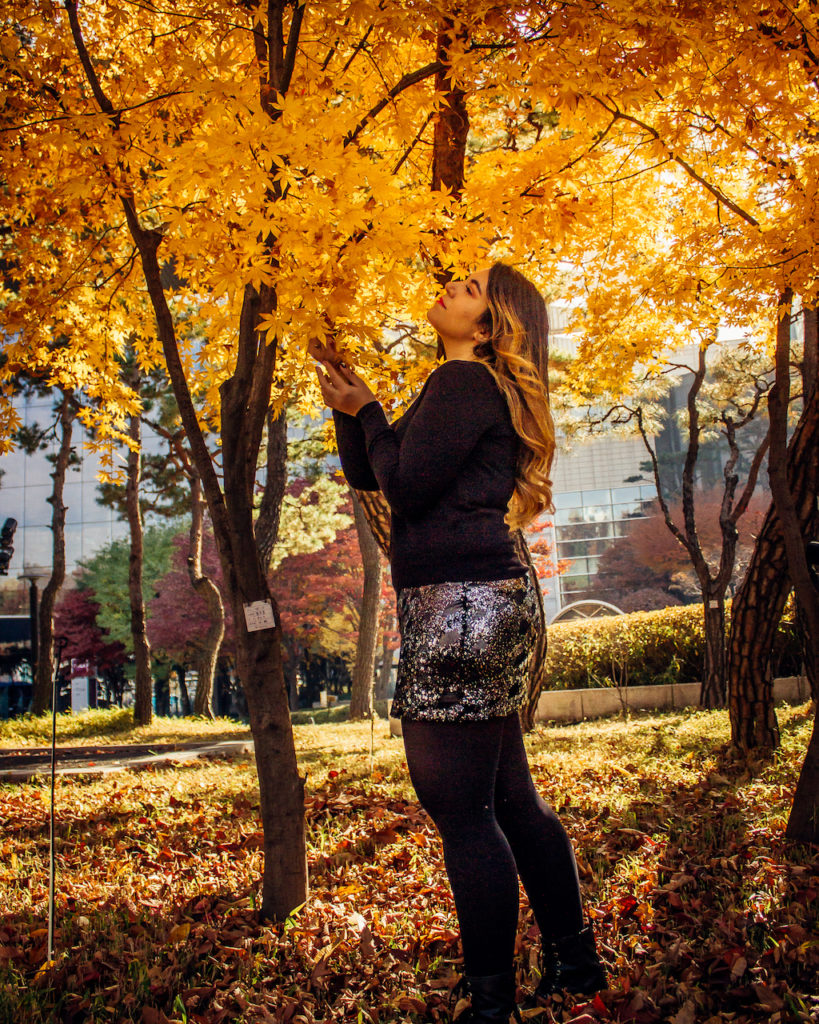
If you’re looking for beautiful autumn foliage in Seoul without leaving the city center, Deoksugung Palace should absolutely be on your itinerary.
Unlike Seoul’s other royal palaces, Deoksugung features an unusual combination of traditional Korean architecture and Western-style buildings. The contrast becomes even more beautiful when the surrounding trees turn golden yellow and deep red.
Deoksugung served as an imperial residence during the final years of the Joseon Dynasty and the Korean Empire. Today, it’s one of the most accessible historic attractions in Seoul, located directly across from Seoul City Hall.
One of the most photogenic spots is Seokjojeon Hall, a grand Western-style stone building surrounded by landscaped grounds. The palace’s traditional pavilions, stone pathways, and mature trees also provide beautiful settings for autumn photography.
I especially recommend taking your time here instead of rushing through the grounds. Autumn is the perfect season to appreciate the details of Korean palace architecture while enjoying the changing leaves.
Gina’s Tip: For a different perspective, look for an elevated view of the palace from the nearby Jeongdong Observatory. The colorful trees surrounding the historic buildings make a beautiful composition, especially during peak foliage.
How to Get There: Take Subway Line 1 or 2 to City Hall Station and use Exit 1 or 12.
Admission: Standard adult admission is generally ₩1,000. Check current prices and opening hours before visiting.
Best Time to Visit: Late October through early November is a typical window for beautiful autumn colors, although peak foliage varies each year.
3. Deoksugung Stonewall Walkway (덕수궁 돌담길)
Right outside Deoksugung Palace is one of the most romantic places to experience autumn in Seoul: Deoksugung Stonewall Walkway.
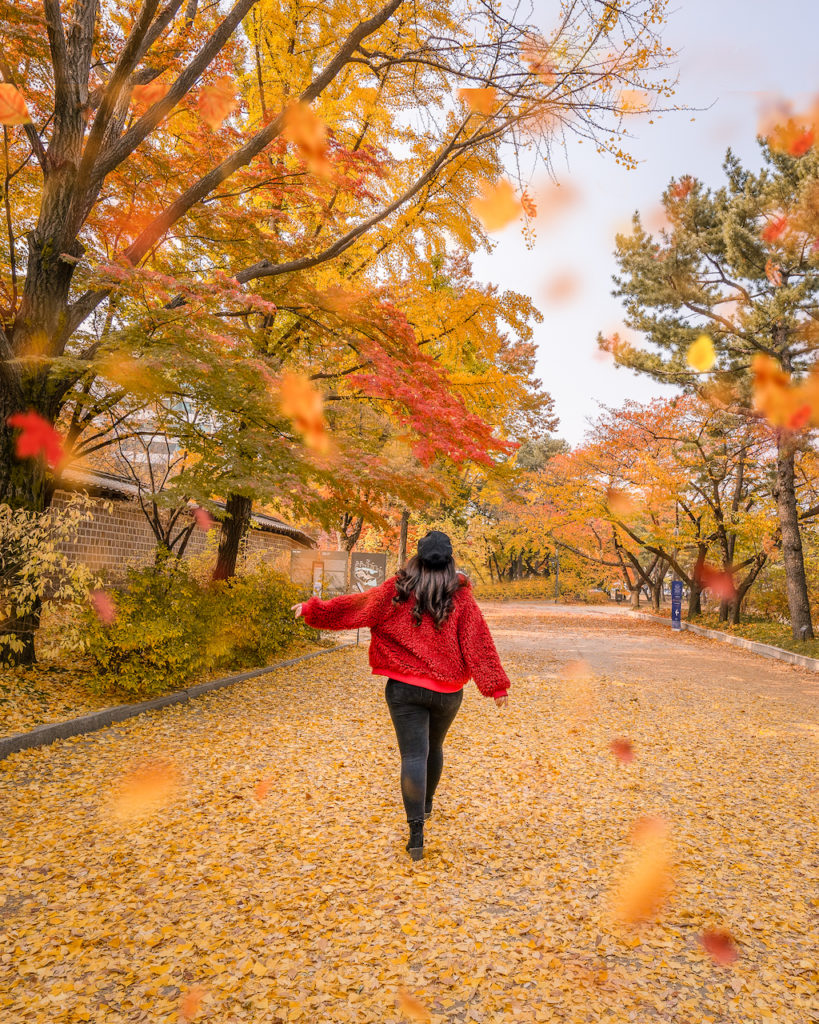
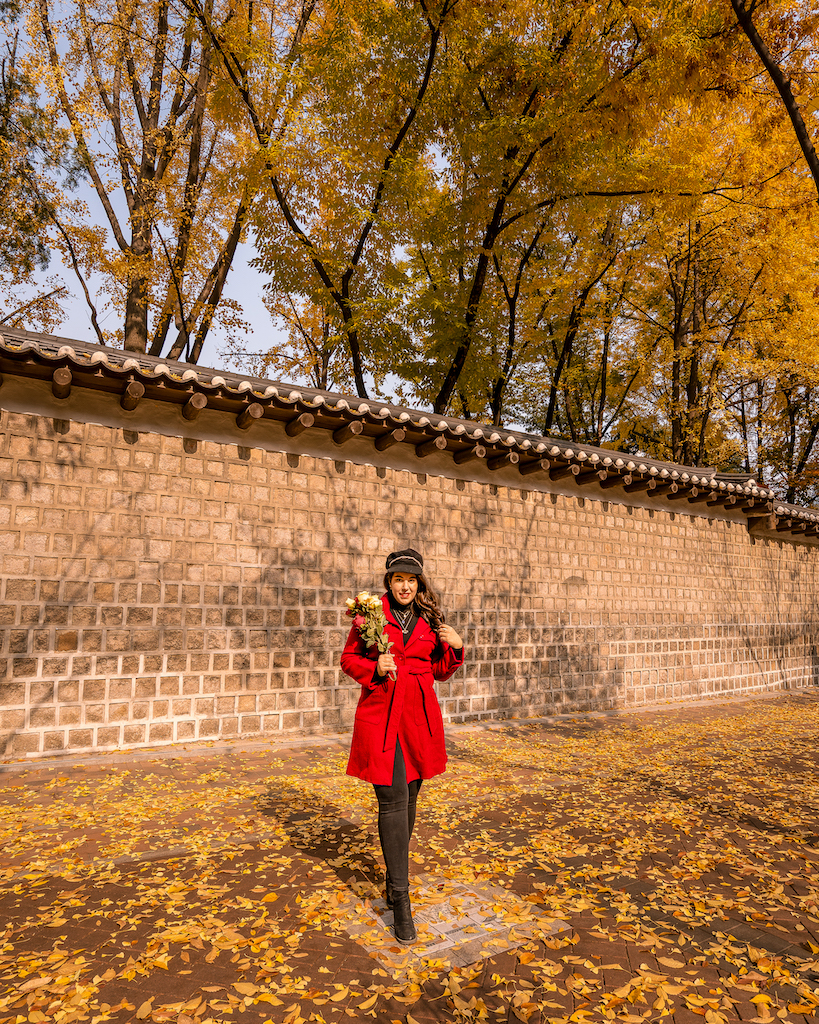
Known in Korean as Deoksugung Doldam-gil, this picturesque street follows the historic stone walls surrounding the palace. In autumn, the towering ginkgo trees turn brilliant shades of gold, creating a beautiful canopy over the pedestrian walkway.
And when the leaves begin falling? The entire street looks like something out of a Korean drama.
The walkway stretches into the historic Jeongdong neighborhood, where you’ll find beautiful architecture, art galleries, museums, and charming cafes.
One of the reasons I recommend this location is that you don’t need an elaborate itinerary to enjoy it. Simply grab a coffee, wander along the stone wall, and appreciate the beautiful fall colors.
There’s also an interesting Korean superstition associated with the walkway. According to local folklore, couples who walk along Deoksugung Stonewall Road together are destined to break up. The legend is often connected to the former location of Seoul’s family court nearby.
Whether you believe the superstition or not, it’s still one of the prettiest autumn walks in Seoul!
Gina’s Tip: Combine this location with Deoksugung Palace since they’re directly next to each other. Visit during the morning for softer lighting and fewer pedestrians in your photos.
How to Get There: Take Subway Line 1 or 2 to City Hall Station, Exit 1.
Admission: Free.
Best For: Golden ginkgo trees, street photography, romantic walks, and traditional Korean architecture.
4. Garosugil (가로수길)
If you love golden ginkgo trees, fashionable neighborhoods, and cute cafes, Garosugil is another beautiful place to explore during autumn in Seoul.
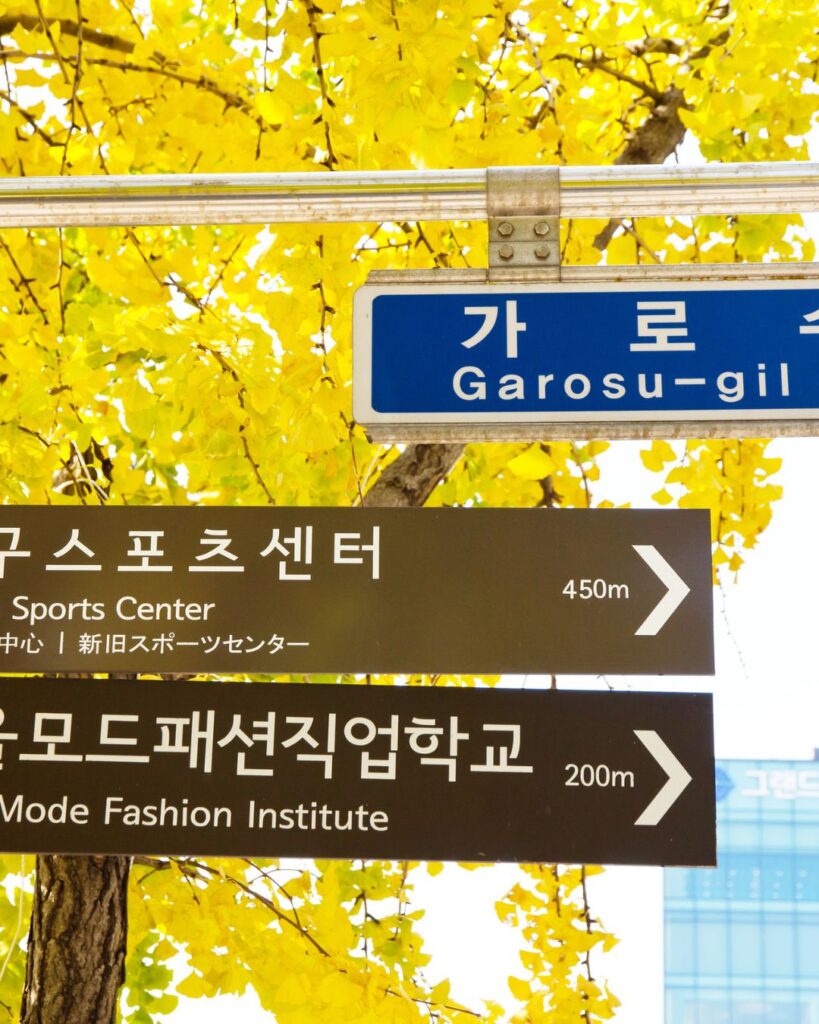
Located in Sinsa-dong, Gangnam, Garosugil literally translates to “tree-lined street.” The neighborhood is famous for its rows of ginkgo trees, which transform into brilliant shades of yellow during the fall season.
In autumn, the contrast between the golden foliage, trendy storefronts, and stylish cafes creates a beautiful urban atmosphere.
Unlike the royal palaces and traditional temples, Garosugil offers a more modern side of Seoul. It’s an excellent destination if you want to combine autumn photography with shopping, coffee, and exploring one of Gangnam’s best-known neighborhoods.
The main street is especially beautiful when the ginkgo leaves begin falling onto the sidewalks. You can photograph the golden trees from different angles or explore the smaller side streets for interesting architectural backdrops.
Just keep in mind that Garosugil’s shops and businesses have changed considerably over the years, so don’t plan your visit around an old list of boutiques or cafes without checking whether they’re still operating.
Gina’s Tip: Visit during the late afternoon when the sunlight filters through the yellow ginkgo leaves. For street photography, try framing the trees against the neighborhood’s modern buildings.
How to Get There: Take Subway Line 3 or the Shinbundang Line to Sinsa Station, Exit 8, and walk toward Garosugil.
Admission: Free.
Best For: Golden ginkgo trees, urban photography, shopping, and cafe hopping.
5. Gyeongbokgung Palace (경복궁)
No autumn trip to Seoul would be complete without visiting Gyeongbokgung Palace, the largest and arguably most famous of Seoul’s five grand royal palaces.
Built in 1395 during the Joseon Dynasty, Gyeongbokgung served as the dynasty’s principal royal palace. Today, it’s one of the most recognizable landmarks in South Korea and an incredible place to experience traditional Korean architecture.
While Gyeongbokgung is beautiful throughout the year, autumn brings an entirely different atmosphere to the palace grounds.
One of the best photography locations is Gyeonghoeru Pavilion, which sits beside a large pond. On a calm autumn day, the pavilion and surrounding trees reflect beautifully in the water.
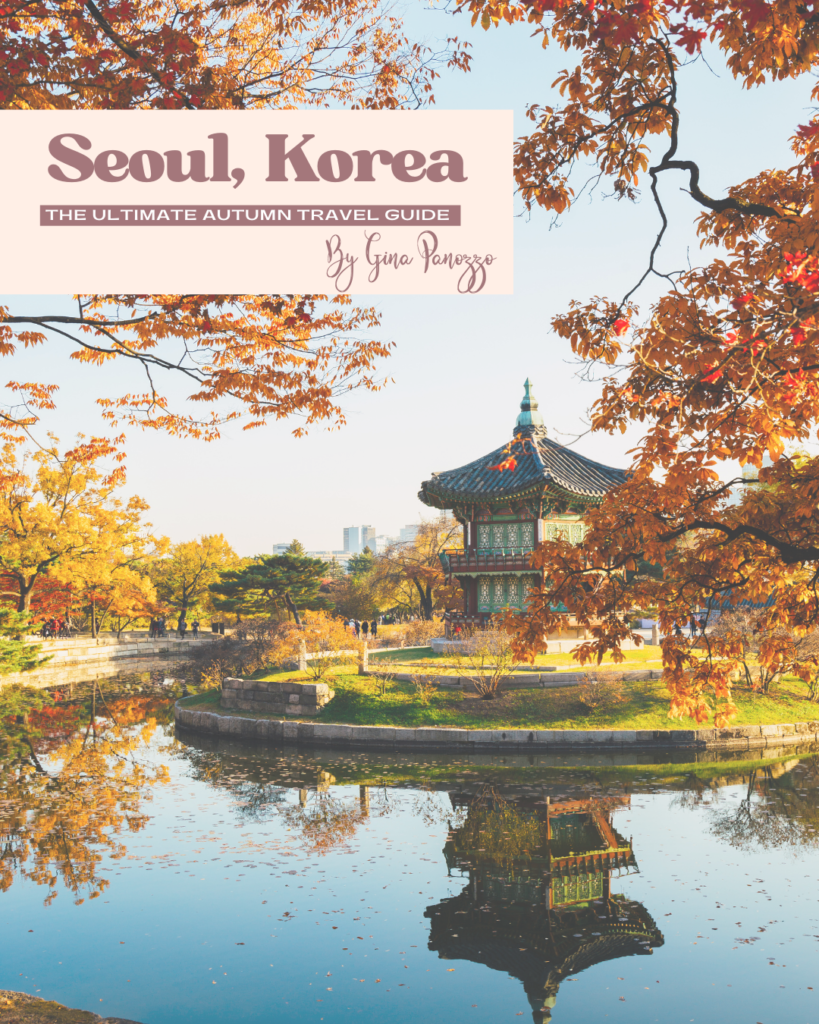
Another must-see location is Hyangwonjeong Pavilion, a beautiful hexagonal structure situated on a small island in a pond. The combination of traditional architecture, colorful foliage, and reflections makes this one of the most picturesque spots in the palace.
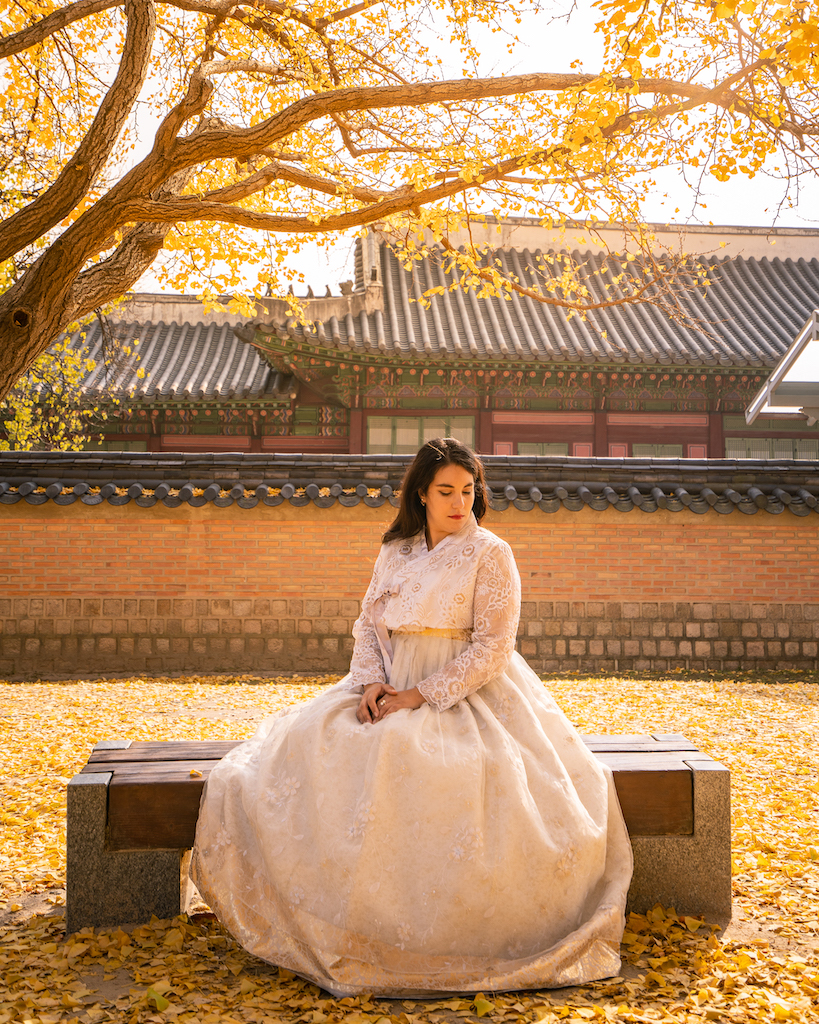
If you’re planning to rent a hanbok during your visit to Seoul, Gyeongbokgung is also one of the best places to wear it. The traditional clothing complements the palace architecture beautifully and makes for memorable photographs.
My favorite hanbok rental shop near Gyeongbokgung is Hanboknam.
Gina’s Tip: Arrive early, especially on weekends. Gyeongbokgung is one of Seoul’s most popular tourist attractions, and the main courtyards can become crowded. Explore beyond the entrance and head toward the ponds for some of the prettiest autumn scenery.
How to Get There: Take Subway Line 3 to Gyeongbokgung Station, Exit 5, or Line 5 to Gwanghwamun Station.
Admission: Standard adult admission is generally ₩3,000. Visitors wearing traditional hanbok can enter for free.
Best Time to Visit: Late October to early November typically offers beautiful fall foliage, depending on the weather.
Important: Gyeongbokgung is generally closed on Tuesdays. Check the official palace schedule before planning your visit.
Autumn in Seoul & South Korea Ebook
Planning everything yourself can be overwhelming, so I’ve also created an autumn Korea itinerary to help you put everything together.
It includes recommendations for where to stay, what to eat, must-see attractions, transportation, packing tips, photo locations, and other insider advice for planning your trip.
What You Will Get In This E-Book:
🏩 Where to stay in Seoul?
🥘 Best restaurants in Seoul?
🇰🇷 Must-see sites & can’t-miss activities?
🍁What to pack for Korea in autumn?
🚆 What transport do I use to get around the city?
🧧 Plus insider travel tips, photo spots, and deep dives you won’t see on my blog.
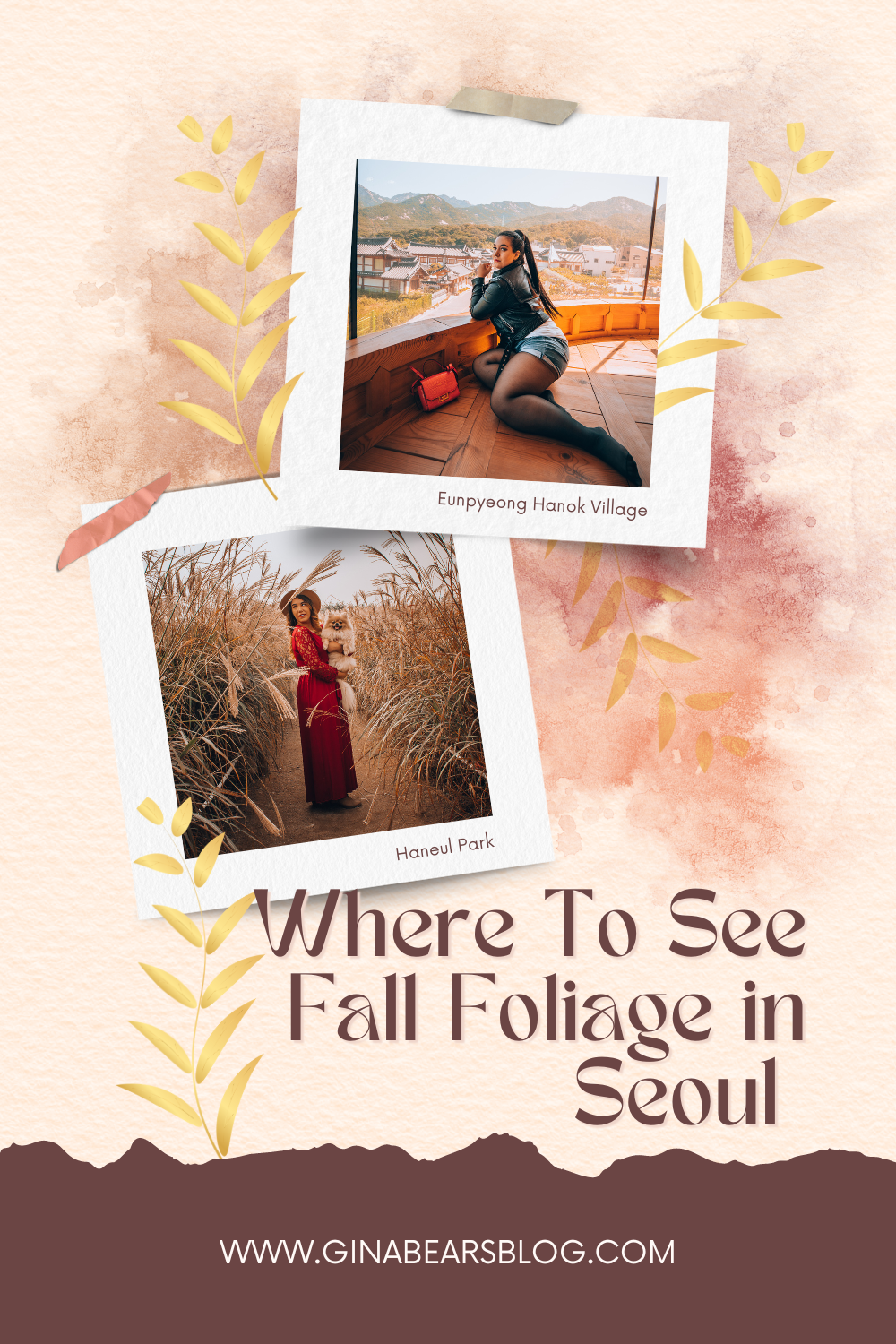
6. Haneul Park (하늘공원)
If you’re looking for one of the most photogenic places to experience autumn in Seoul, Haneul Park deserves a spot on your itinerary!
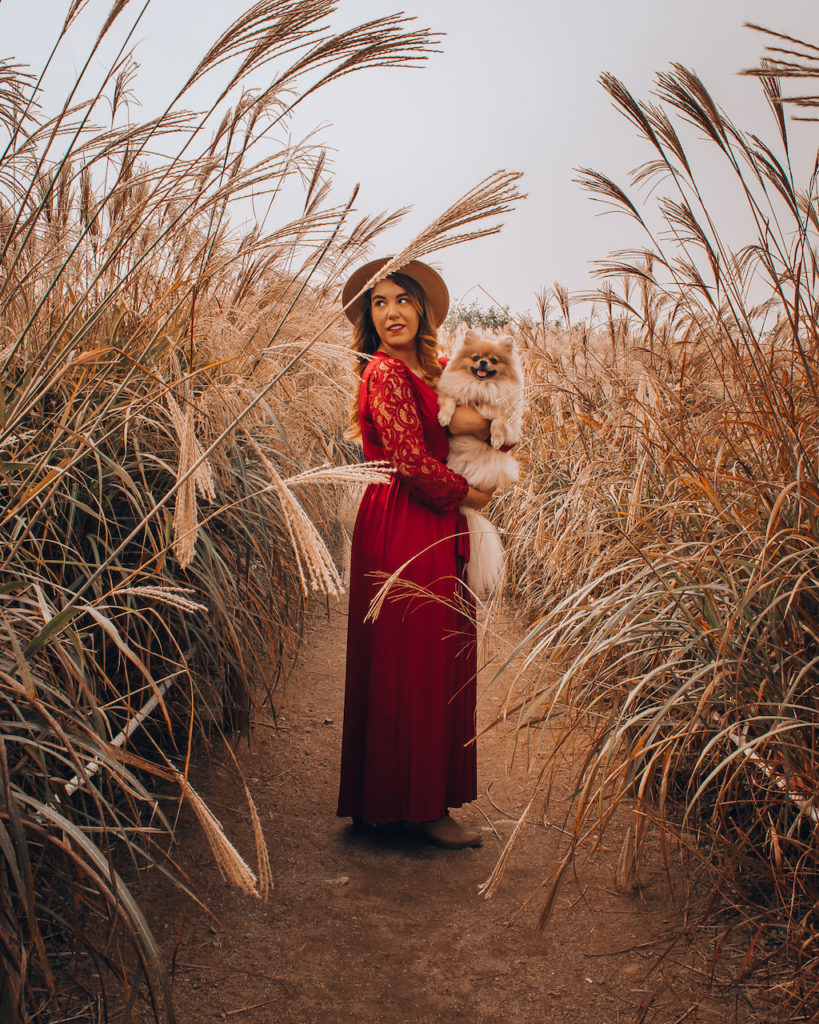
Located within World Cup Park, Haneul Park is famous for its sweeping fields of silver grass, panoramic views of Seoul, and gorgeous autumn sunsets. And here’s a fun fact: this beautiful park was once part of a massive landfill before being transformed into one of the city’s most popular green spaces.
Talk about a glow-up!
Every autumn, the park’s tall silver grass turns a beautiful golden color, creating an almost dreamlike landscape. When the wind blows through the fields, the grass sways in waves, making the entire hillside look like a shimmering sea of gold.
The annual Seoul Silver Grass Festival, typically held in October, celebrates the park’s beautiful seasonal scenery. Depending on the year’s schedule, visitors may find special installations, illuminated pathways, and photography opportunities.
If you’re looking for more Korean autumn festivals, I also have a complete guide on the best ones around the country.
One of the best things about Haneul Park is the view. From the top, you can admire the Han River, surrounding mountains, and Seoul’s skyline.
Gina’s Tip: Visit during golden hour, shortly before sunset. The sunlight makes the silver grass glow, and the views are absolutely stunning. Wear comfortable shoes because reaching the park involves a substantial uphill walk or a long staircase. A paid electric shuttle may also operate, depending on the season.
How to Get There: Take Seoul Subway Line 6 to World Cup Stadium Station, Exit 1, and walk toward Haneul Park.
Admission: Generally free, although special transportation or festival activities may have separate charges.
Best Time to Visit: October through early November, especially when the silver grass is at its fullest.
7. Seoul City Wall (서울한양도성)
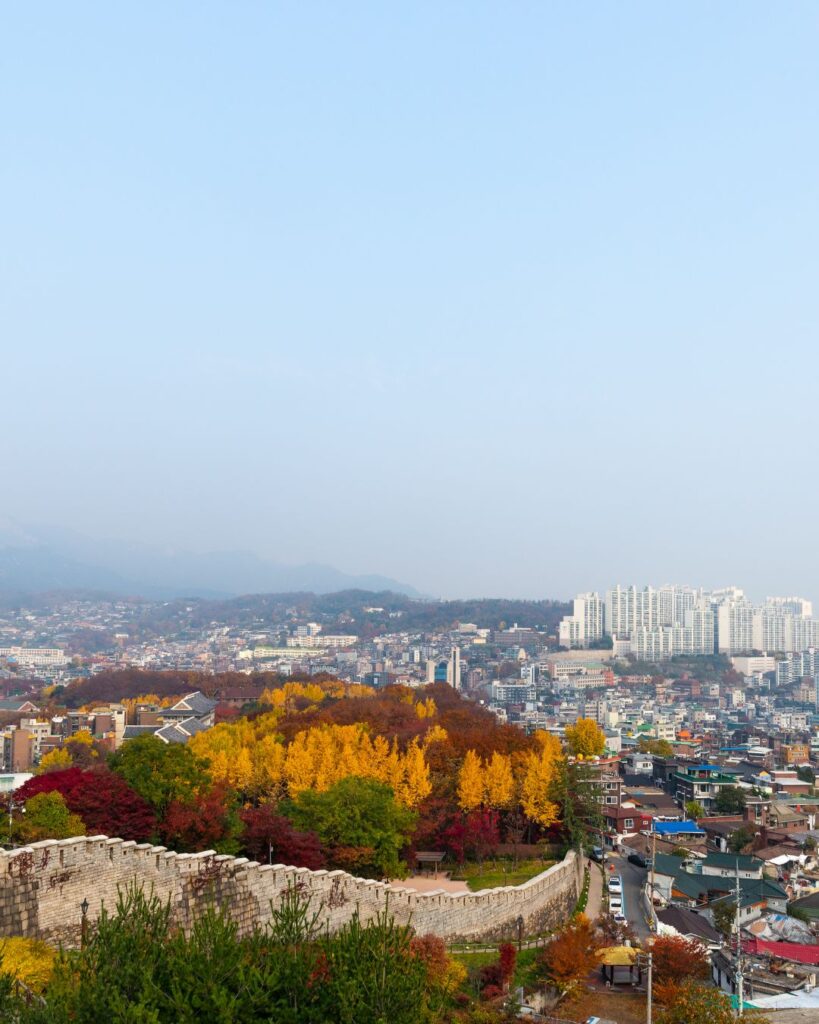
Want to combine beautiful autumn foliage in Seoul with a little Korean history? The Seoul City Wall is one of the most rewarding places to explore.
Originally constructed in 1396 during the Joseon Dynasty, the Seoul City Wall was built to protect the capital, then known as Hanyang. Today, sections of the historic fortification stretch across Seoul’s mountains and neighborhoods, offering incredible views of the city.
During autumn, the surrounding hillsides transform into shades of red, orange, and yellow, making the walking trails especially beautiful.
One of the best things about exploring the Seoul City Wall is that you can experience a completely different side of the city. Instead of crowded shopping streets and skyscrapers, you’ll find peaceful mountain paths, historic stone walls, and sweeping views of Seoul.
Some of the most scenic sections include the Naksan Mountain trail, which offers relatively accessible walking routes, and the more challenging stretches near Bugaksan and Inwangsan.
If you’re interested in photography, the contrast between the ancient stone walls and colorful autumn trees creates some seriously beautiful compositions.
And when you look out over the city, you’ll see exactly why Seoul is such an incredible combination of old and new.
Gina’s Tip: Choose your walking route based on your fitness level. Naksan is a great option for a more relaxed outing, while the mountain sections can involve steep stairs and uneven paths. Bring water and wear proper walking shoes.
How to Get There: Access depends on the section. For the Naksan route, take Subway Line 4 to Hyehwa Station and walk toward Naksan Park.
Admission: Generally free. Certain sections may have access restrictions or designated visiting hours.
Best Time to Visit: Late October through early November for colorful hillsides and comfortable hiking weather.
8. Namsan Park & N Seoul Tower (남산공원 & N서울타워)
If there’s one place that perfectly captures autumn in Seoul, it’s Namsan Park.
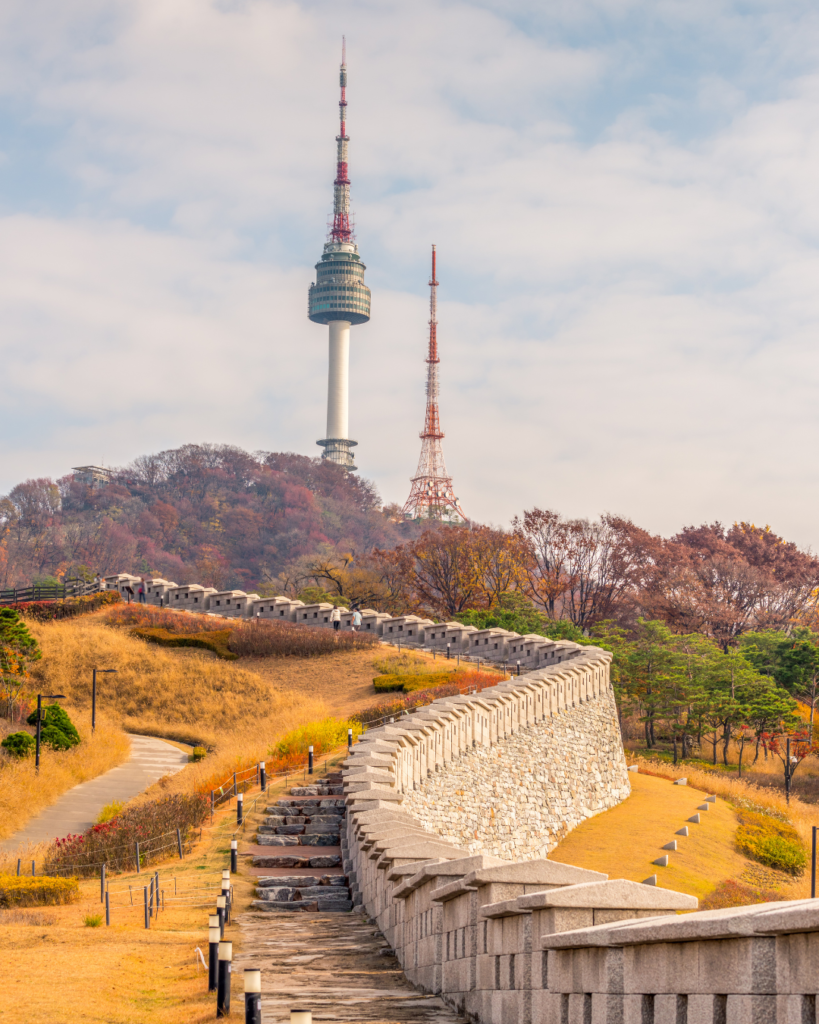
Located in the heart of the city, Namsan is one of Seoul’s most recognizable mountains and home to the famous N Seoul Tower. During autumn, the mountain becomes covered in gorgeous shades of yellow, orange, and red.
And the best part? You don’t even need to leave central Seoul to experience it!
Namsan Park has several walking trails that wind through the forest, offering beautiful views of the surrounding foliage. As you climb higher, you’ll find incredible viewpoints overlooking the city.
The contrast between the colorful trees and Seoul’s sprawling skyline is absolutely spectacular.
One of the most popular ways to reach the summit is by taking the Namsan Cable Car, which offers elevated views of the autumn scenery. However, if you enjoy walking, I recommend exploring the park’s trails instead.
There’s something special about wandering beneath colorful trees, listening to the leaves crunch under your feet, and slowly making your way toward one of Seoul’s most famous landmarks.
Once you reach the top, you can explore the area surrounding N Seoul Tower and enjoy panoramic views of the city.
Gina’s Tip: You don’t need to pay for the tower’s observation deck to enjoy beautiful views. There are outdoor viewpoints around the tower where you can admire Seoul’s skyline for free. For autumn photography, visit during the morning or late afternoon when the light is softer.
How to Get There: Take Subway Line 4 to Myeongdong Station and walk toward the Namsan Cable Car, or use one of the designated Namsan circular buses. Walking routes are also available from several nearby neighborhoods.
Admission: Namsan Park is free. The cable car and N Seoul Tower observatory charge separate fees.
Best Time to Visit: Late October through early November.
9. Olympic Park (올림픽공원)
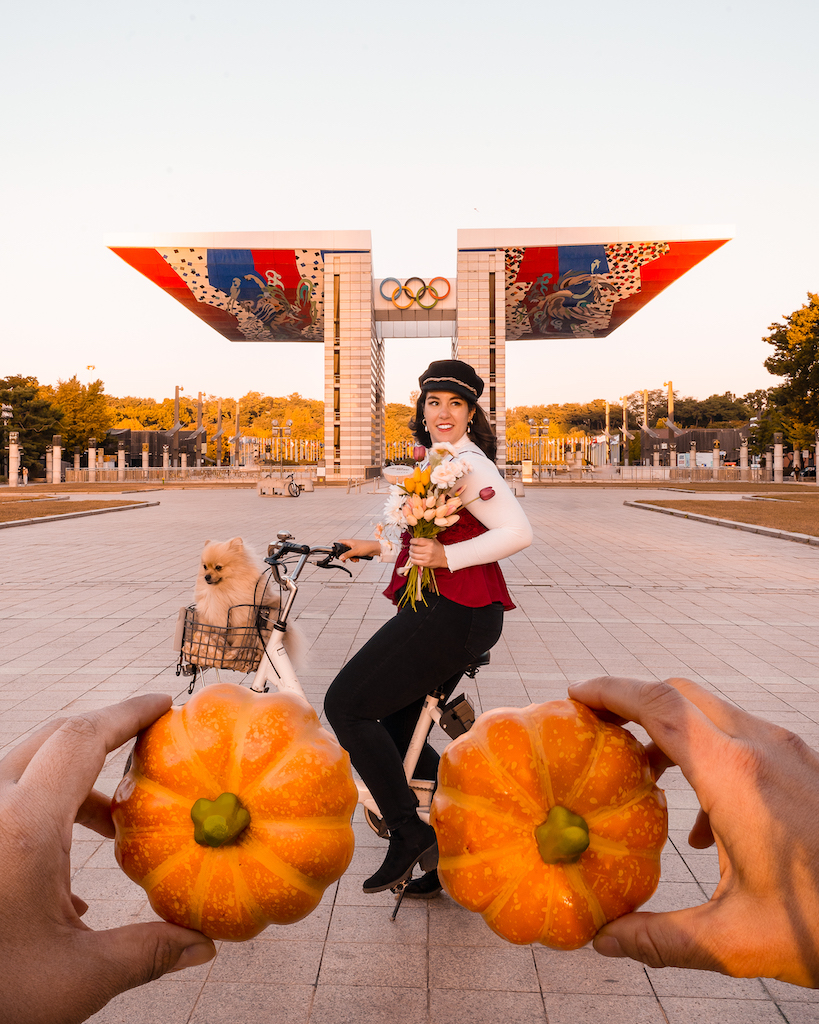
Olympic Park is one of the best places to enjoy autumn in Seoul, especially if you love spacious parks, seasonal flowers, and beautiful photography locations.
Originally developed for the 1988 Seoul Summer Olympics, this enormous park combines sports facilities, historic sites, walking trails, gardens, and open green spaces.
During autumn, the park transforms into a colorful landscape filled with golden trees, vibrant foliage, and beautiful seasonal flowers.
And because Olympic Park is so large, there are plenty of opportunities to escape the crowds and discover quieter photography spots.
One of my favorite things about parks like this is that you can spend hours wandering without feeling like you’re following a strict sightseeing itinerary.
Bring a coffee, enjoy the cooler autumn weather, and explore the different sections of the park at your own pace.
Loving my outfits in this post and wondering what to wear in Seoul this autumn? I have a complete guide that breaks down what to wear in September, October, and November.
Some of Olympic Park’s most recognizable attractions include the World Peace Gate, Mongchontoseong Earthen Fortification, and the famous One Tree Hill.
The park is also known for its seasonal flower displays, including cosmos flowers that typically bloom in autumn.
If you’re planning a Seoul fall foliage photography day, Olympic Park is a great place to dedicate several hours because there are so many different backdrops within walking distance.
Gina’s Tip: Olympic Park is enormous, so wear comfortable shoes and allow at least two to three hours if you want to explore several photography locations. Check the park map before arriving so you don’t waste time walking back and forth.
How to Get There: Take Subway Line 8 or 9 to Mongchontoseong Station, or Line 5 or 9 to Olympic Park Station, depending on which section you want to explore.
Admission: Generally free, although certain facilities and events may charge admission.
Best Time to Visit: October through early November.
10. Cosmos Field at Olympic Park (올림픽공원 코스모스 꽃밭)
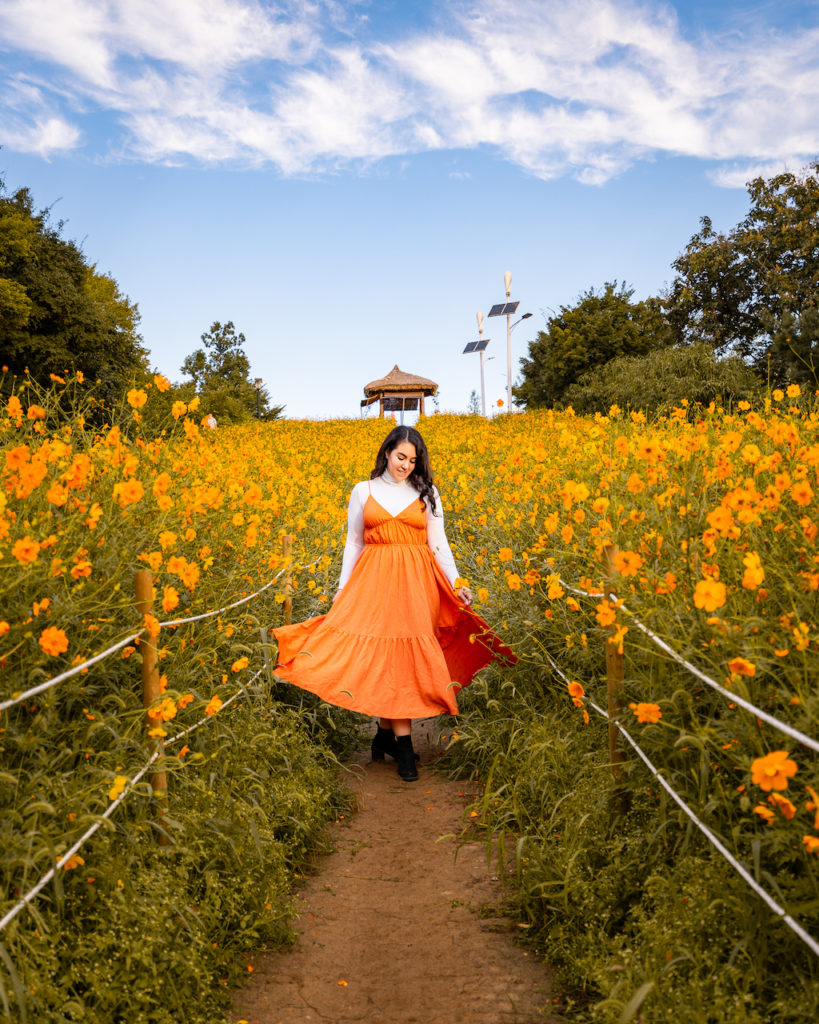
If you love flowers, you absolutely need to check out the cosmos fields at Olympic Park during autumn in Seoul.
Cosmos flowers are one of my favorites!
These delicate flowers typically bloom in shades of pink, white, and magenta during spring in Korea. In autumn, the cosmos that bloom are typically orange.
When the flowers are in bloom, the fields provide a gorgeous backdrop for portraits, travel photography, and those dreamy fall photos you’ve probably seen all over Instagram.
The flowers are especially beautiful on sunny days when the petals catch the light.
One thing I love about cosmos fields is how different they look from traditional fall foliage destinations. Instead of photographing trees and mountain scenery, you can capture colorful flowers with the park’s open landscape in the background.
However, flower displays can change from year to year depending on planting schedules, weather, and park maintenance. Don’t assume the fields will look exactly the same every autumn.
Gina’s Tip: Visit during the morning or late afternoon for the most flattering photography light. Avoid stepping into the flower beds just to get a photo. You can capture beautiful pictures from the designated pathways without damaging the flowers.
How to Get There: Take Subway Line 5 or 9 to Olympic Park Station or Line 8 or 9 to Mongchontoseong Station, then follow the park’s current map to the seasonal flower areas.
Admission: Free to explore the public park grounds.
Best Time to Visit: Typically September through October for cosmos flowers, although exact blooming dates vary each year.
11. 88 Lake at Olympic Park (88호수)
One of the prettiest places to photograph autumn in Seoul is 88 Lake at Olympic Park. While most visitors head straight for the famous One Tree Hill, this peaceful lakeside area deserves some attention, too.
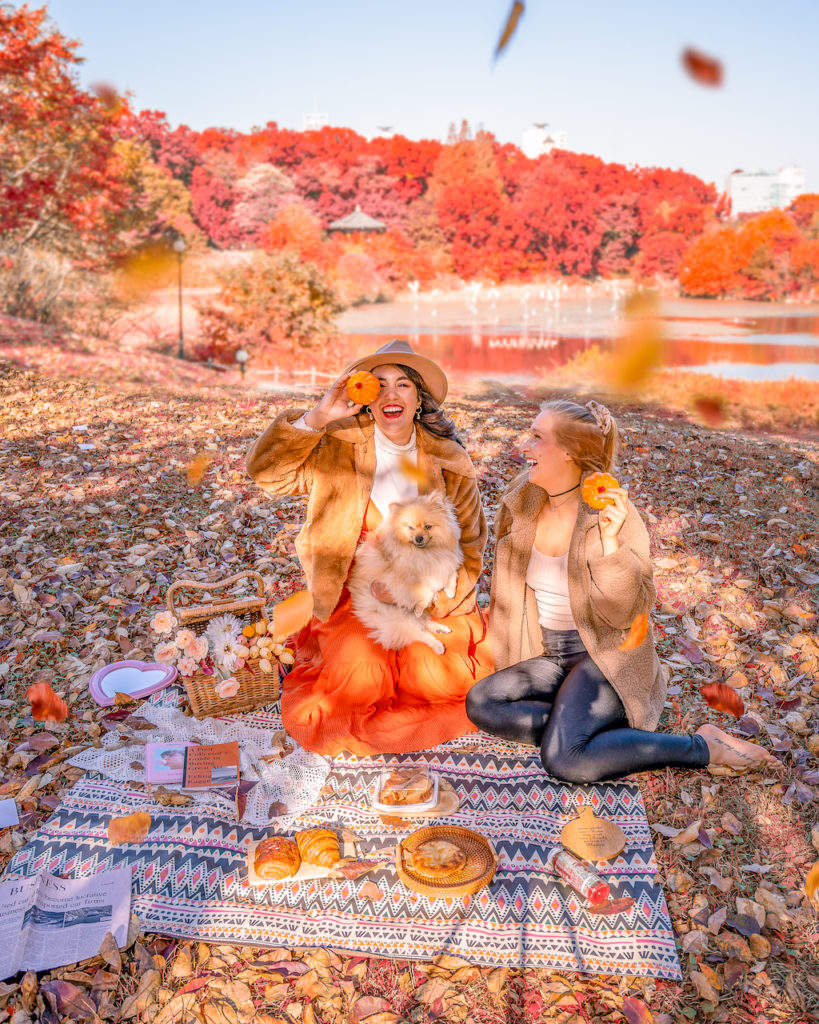
The lake is surrounded by walking paths, mature trees, and landscaped greenery that become especially beautiful during autumn. As the leaves change into shades of yellow, orange, and red, the water creates gorgeous reflections of the surrounding foliage.
If you love taking photographs, this is a fantastic place to experiment with different compositions. On a calm day, the reflections can make the autumn scenery look twice as colorful.
Unlike some of Seoul’s more crowded attractions, the lakeside paths offer a relaxing place to slow down and enjoy the season.
You can easily combine a visit to 88 Lake with other areas of Olympic Park, making it a convenient stop on your autumn photography itinerary.
Gina’s Tip: Look for compositions that include the colorful trees and their reflections. And don’t forget to explore the surrounding walking paths for different perspectives.
How to Get There: Take Subway Line 8 or 9 to Mongchontoseong Station, then walk into Olympic Park and follow signs toward 88 Lake.
Admission: Free.
Best Time to Visit: Late October through early November.
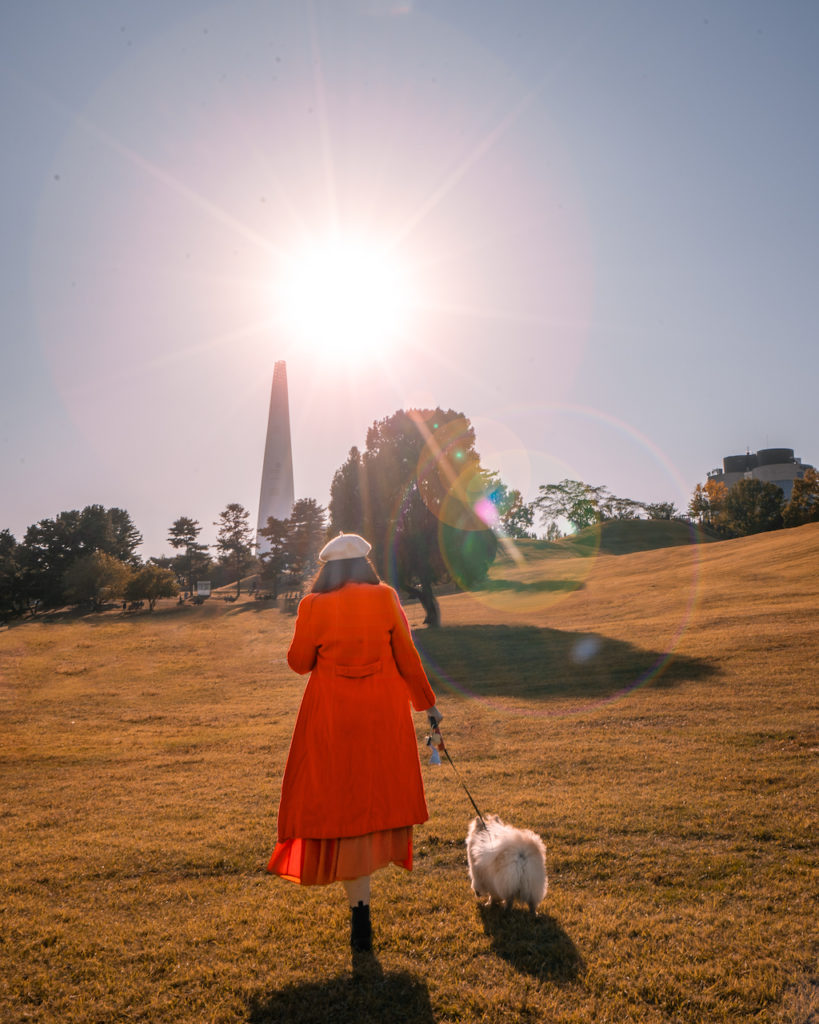
12. One Tree Hill (나홀로나무)
If you’ve ever searched for beautiful photography spots in Seoul, chances are you’ve come across the famous One Tree Hill at Olympic Park.
Known in Korean as Nahollo Namu, or the Lonely Tree, this iconic tree stands by itself on a gently rolling grassy hill. Its simple silhouette against the open sky has made it one of Olympic Park’s most recognizable landmarks.
And during autumn? It’s even more beautiful.
As the surrounding grass and vegetation change with the season, the landscape takes on warm golden and earthy tones. The solitary tree creates a striking focal point, making this location especially popular with photographers.
One of the reasons I love the concept of this location is its simplicity. You don’t need elaborate architecture, colorful decorations, or dramatic mountain scenery to create a memorable photograph.
Sometimes, all you need is one beautiful tree.
The surrounding Mongchontoseong area also has walking paths and open fields where you can enjoy Seoul’s cooler autumn weather.
Gina’s Tip: For the best photographs, step back and include the surrounding hill and sky in your composition. Early morning and late afternoon usually provide softer lighting. This is a popular photo spot, so be prepared to wait your turn during busy weekends.
How to Get There: Take Subway Line 8 or 9 to Mongchontoseong Station, then walk through Olympic Park toward the Mongchontoseong earthen fortification area.
Admission: Free.
Best Time to Visit: October through early November.
13. Lotte World 6th Floor Stairs (롯데월드)
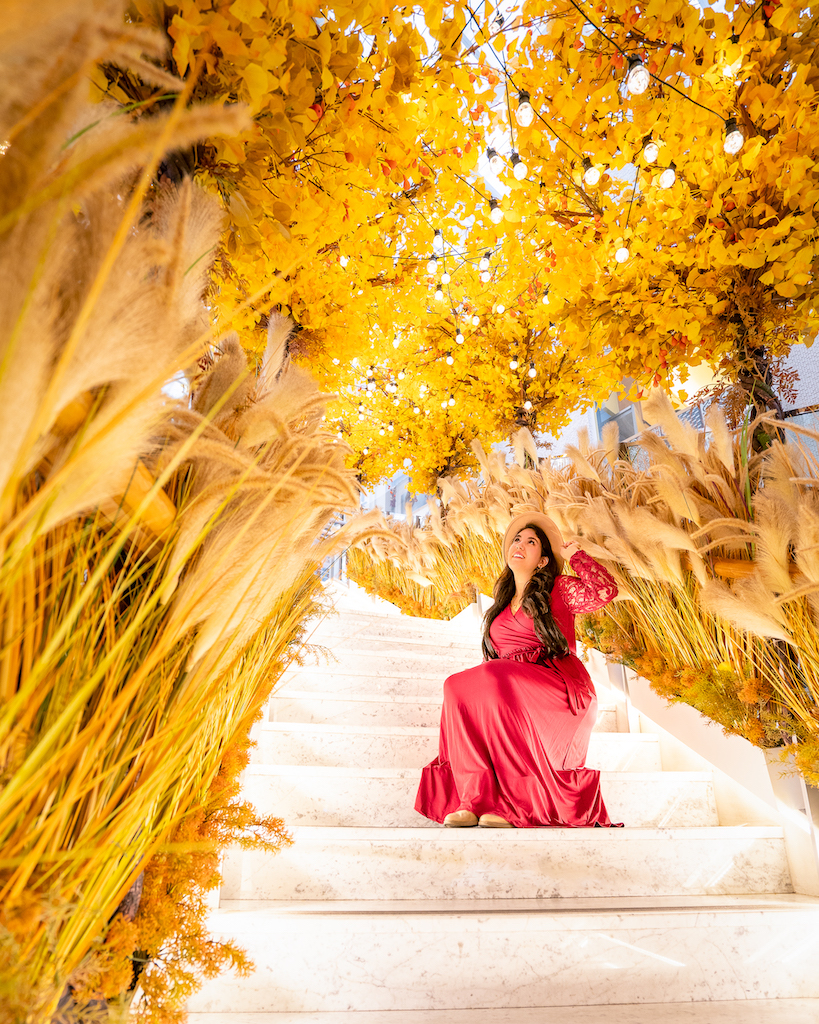
I like Seoul in the fall most of all because it is so dreamy. Koreans know how to go all out with an autumn leaves aesthetic.
Each season, or for special promotional events, the 6th-floor stairs at Lotte World Mall get decked out. I noticed that since this photo was taken, the mall hasn’t been decorated.
I also searched Instagram and couldn’t find any photos of the sixth-floor stairs being decorated.
Gina’s Tip: Go during the week. It’s hard to get pictures here on the weekend due to people walking up and down the stairs.
How to Get There: Take Subway Line 2 or 8 to Jamsil Station and follow signs toward Lotte World Mall.
14. Changdeokgung Palace (창덕궁)
If you want to experience some of the most beautiful autumn foliage in Seoul, Changdeokgung Palace should be near the top of your list.
Built in 1405 during the Joseon Dynasty, Changdeokgung is one of Seoul’s five grand royal palaces and a designated UNESCO World Heritage Site.
What makes this palace particularly special is how beautifully its architecture blends with the surrounding natural landscape.
And if there’s one place you absolutely shouldn’t miss, it’s the famous Secret Garden.
Also known as Huwon, the Secret Garden features beautiful ponds, traditional pavilions, stone pathways, and centuries-old trees. During autumn, the garden transforms into a spectacular landscape of golden ginkgo trees and vibrant red maple leaves.
One of the most picturesque locations is Buyongji Pond, where the surrounding foliage reflects in the water beside traditional Korean architecture.
The combination of historic buildings, colorful trees, and tranquil scenery makes Changdeokgung one of the best places for autumn photography in Seoul.
Gina’s Tip: Reserve your preferred admission time online in advance (only 50 tickets are available out of 100). Opens at 10:00 AM KST, exactly 6 days before your planned tour date.
Walk-up tickets: Go straight to the main ticket office near the front entrance (Donhwamun Gate / Geumhomun area). The on-site ticket booth opens at 9:00 AM. Morning or popular English/language tour slots frequently sell out early in the day. They hold 50 tickets, and it is on a first-come, first-served basis.
How to Get There: Take Subway Line 3 to Anguk Station, Exit 3, and walk approximately 5–10 minutes to the palace entrance.
Admission: General palace admission is typically ₩3,000 for adults, with a separate admission fee for the Secret Garden.
Best Time to Visit: Late October through early November.
Important: Changdeokgung is generally closed on Mondays, except when holiday arrangements change the schedule.

15. Jogyesa Temple (조계사)
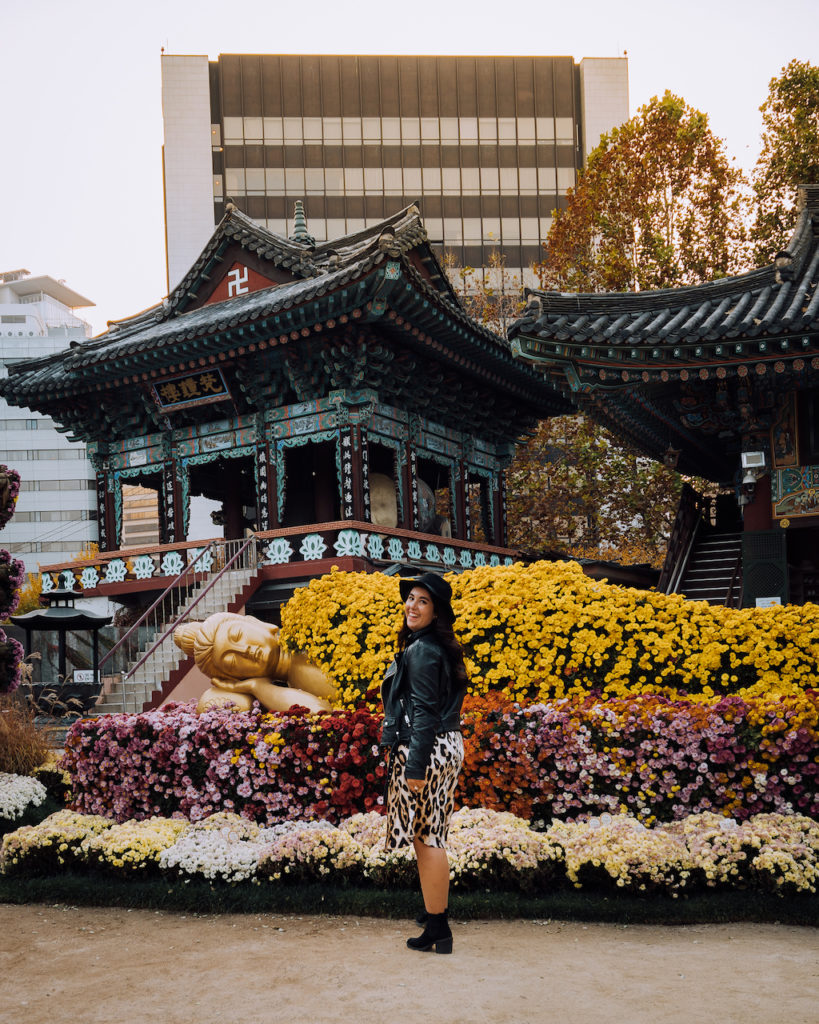
If you’re exploring central Seoul during autumn, don’t overlook Jogyesa Temple.
Located near Insadong, Jogyesa is one of the most important Buddhist temples in South Korea and serves as the headquarters of the Jogye Order of Korean Buddhism.
The temple is surrounded by busy streets and modern buildings. Stepping inside the grounds feels like entering a completely different world.
Because Jogyesa is located in the middle of Seoul, it’s also one of the easiest autumn destinations to include in a sightseeing itinerary.
You can combine your visit with nearby Insadong, Bukchon Hanok Village, or Gyeongbokgung Palace without spending hours traveling across the city.
And unlike the larger palace complexes, you don’t need an entire afternoon to explore the temple grounds.
Gina’s Tip: Visit during the morning for a quieter atmosphere and beautiful natural light. Remember that Jogyesa is an active Buddhist temple, so be mindful of worshippers and avoid disrupting religious ceremonies while taking photographs.
How to Get There: Take Subway Line 3 to Anguk Station, Exit 6, or Line 1 to Jonggak Station and walk toward Jogyesa Temple.
Admission: Free.
Best Time to Visit: Late October through early November, especially when the large ginkgo tree turns golden yellow.
16. Seokchon Lake (석촌호수)
Located in the Jamsil neighborhood, Seokchon Lake is famous for its cherry blossoms in spring, but I think autumn deserves just as much attention!
What makes Seokchon Lake especially unique is its location. You’ll find Seoul’s most recognizable modern landmarks, including Lotte World Tower and Lotte World Adventure.
The lake is divided into eastern and western sections, connected by pedestrian paths. The western lake is particularly interesting because it surrounds Lotte World Magic Island, giving you a chance to photograph a fairytale-like amusement park against colorful autumn trees.
And if you love photographing reflections, you’re going to have a field day here.
Gina’s Tip: Walk around both sections of the lake instead of stopping at the first pretty viewpoint. The scenery changes depending on where you stand, and some of the best photographs include Lotte World Tower rising above the autumn foliage.
How to Get There: Take Subway Line 2 or 8 to Jamsil Station and follow the signs toward Seokchon Lake.
Admission: Free.
Best Time to Visit: Late October through early November.

17. Seoul Forest (서울숲)
Seoul Forest is one of my favorite recommendations for anyone who wants to enjoy autumn in Seoul without venturing too far from the city center.
Located in Seongdong-gu, this sprawling urban park offers beautiful walking trails, wooded areas, open lawns, and seasonal scenery.
One of the most photogenic areas is the park’s ginkgo tree paths, where the leaves create a golden canopy overhead. When they begin falling, the ground becomes covered in yellow leaves, making it look like something straight out of a Korean drama.
The park also has beautiful wooded trails and peaceful areas where you can escape the crowds.
If you’re lucky, you might even spot some of the deer that live within the park’s designated ecological area. Just remember to respect the barriers and follow the park’s wildlife rules.
Another reason I recommend Seoul Forest is its proximity to Seongsu-dong, one of Seoul’s trendiest neighborhoods.
After exploring the park, you can head into Seongsu for coffee, shopping, or a meal at one of the neighborhood’s many restaurants.
Gina’s Tip: Visit on a weekday morning if you want photos without too many people in the background. Seoul Forest is especially popular with couples, families, and photographers during peak fall foliage season.
How to Get There: Take the Suin–Bundang Line to Seoul Forest Station, Exit 3, or Subway Line 2 to Ttukseom Station and walk to the park.
Admission: Free.
Best Time to Visit: Late October through early November.
18. Jahayeon Pond At Seoul National University (서울대학교 자하연)
If you want to discover a lesser-known place to see autumn leaves in Seoul, Jahayeon Pond at Seoul National University is worth considering.
While most tourists spend their time visiting famous palaces and parks, Seoul’s university campuses can also be beautiful during autumn.
Seoul National University sits near the foothills of Gwanaksan Mountain, giving parts of the campus a peaceful, wooded atmosphere.
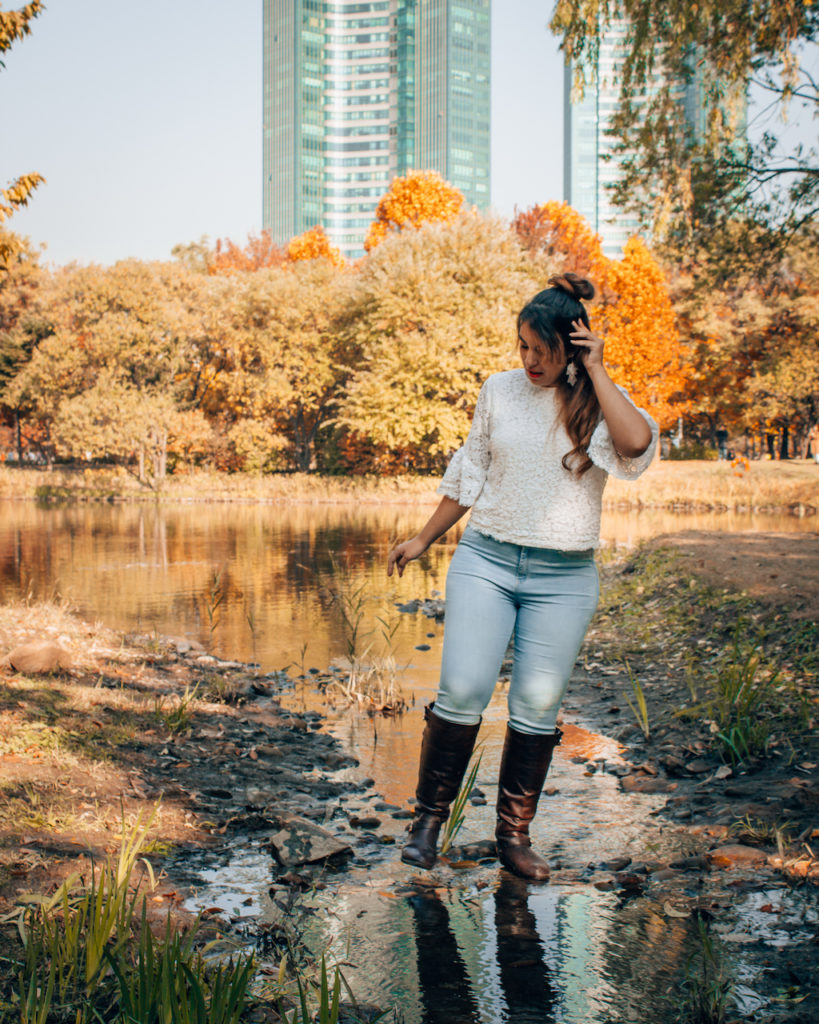
Jahayeon Pond is a landscaped pond surrounded by trees, walking paths, and campus buildings. During autumn, the surrounding foliage turns beautiful shades of yellow, orange, and red.
The reflections in the pond can create lovely photography opportunities, especially when the water is calm.
What makes this location different from Seoul’s more famous autumn attractions is its atmosphere. Instead of a busy tourist destination, you’re exploring a university campus where students go about their daily lives.
It’s a nice option for travelers who enjoy finding quieter, less conventional photography spots.
Gina’s Tip: Remember that Seoul National University is an active university, not a tourist attraction. Be respectful of students and staff, avoid entering restricted buildings, and check whether any campus access policies apply before visiting.
How to Get There: Take Subway Line 2 to Seoul National University Station and transfer to a campus-bound bus. The university is quite far from the subway station, so I don’t recommend walking the entire distance unless you’re planning a longer outing.
Admission: The outdoor campus grounds are generally accessible without an admission fee, subject to university policies.
Best Time to Visit: Late October through early November.
19. Yongma Land (용마랜드)
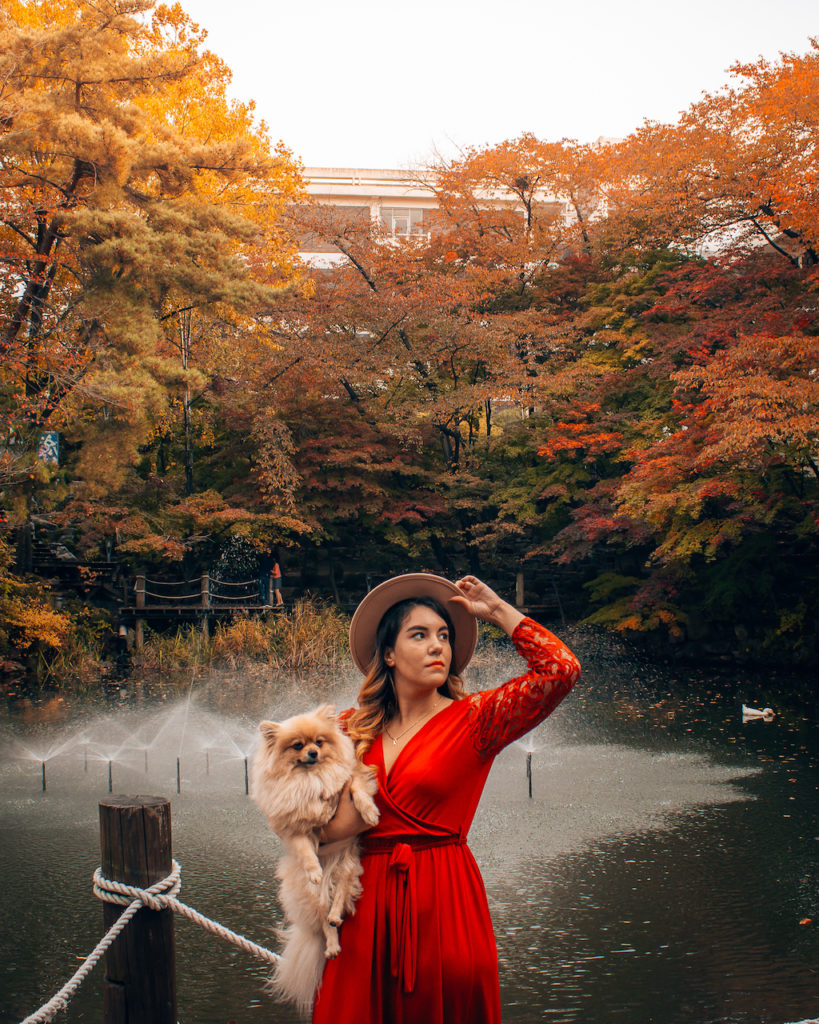
Looking for something a little different from Seoul’s traditional autumn foliage destinations? Yongma Land is one of the city’s more unusual photo spots.
Located near Yongmasan Mountain, Yongma Land is a former amusement park known for its vintage rides, colorful structures, and slightly eerie atmosphere.
Yongma Land became popular as a photography and filming location after its amusement rides stopped operating.
The abandoned amusement park aesthetic has made it especially appealing to photographers, K-pop fans, and visitors looking for unique backdrops.
Gina’s Tip: This is a location I’d recommend primarily for photography enthusiasts rather than travelers whose only goal is to see colorful autumn leaves.
How to Get There: Take Subway Line 7 to Myeonmok Station, then continue by local transportation or taxi toward Yongma Land. Confirm access before traveling.
Admission: 5,000 KRW.
Best Time to Visit: Late October through early November for seasonal color in the surrounding area, provided the site is open.
20. Suguksa Golden Temple Seoul (수국사)
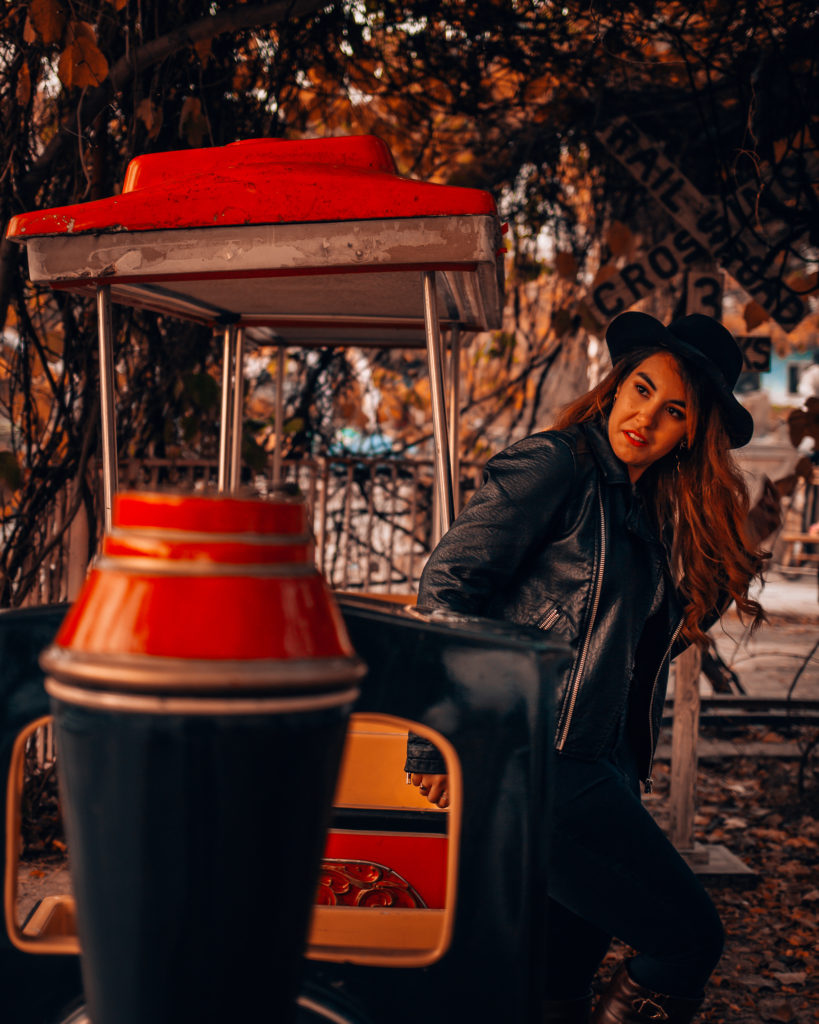
One of the more unusual temples in Seoul is Suguksa, often nicknamed the Golden Temple because of its striking gold-colored exterior.
Located in Eunpyeong-gu, Suguksa is a Buddhist temple that stands out from Seoul’s more familiar traditional temple buildings.
Suguksa offers an opportunity to explore a lesser-known Buddhist temple in a quieter residential part of Seoul.
It’s particularly interesting if you enjoy photographing Korean religious architecture and discovering places outside the typical tourist itinerary.
I recommend combining Suguksa with other attractions in northern Seoul, like Eunpyeong Hanok Village. Don’t forget to visit Cafe 1인1잔.
Gina’s Tip: The golden exterior is the star of the show here! Remember that this is an active place of worship, so be respectful of religious ceremonies and visitors.
How to Get There: Suguksa is located in Eunpyeong-gu. You can reach the general area using Subway Line 6 and local buses, but check Naver Map or KakaoMap for the most convenient route from your starting location.
Admission: Free.
Best Time to Visit: Late October through early November.
21. Bukhansan National Park (북한산국립공원)
If you want to experience some of the most spectacular autumn foliage in Seoul, Bukhansan National Park absolutely deserves a place on your itinerary.
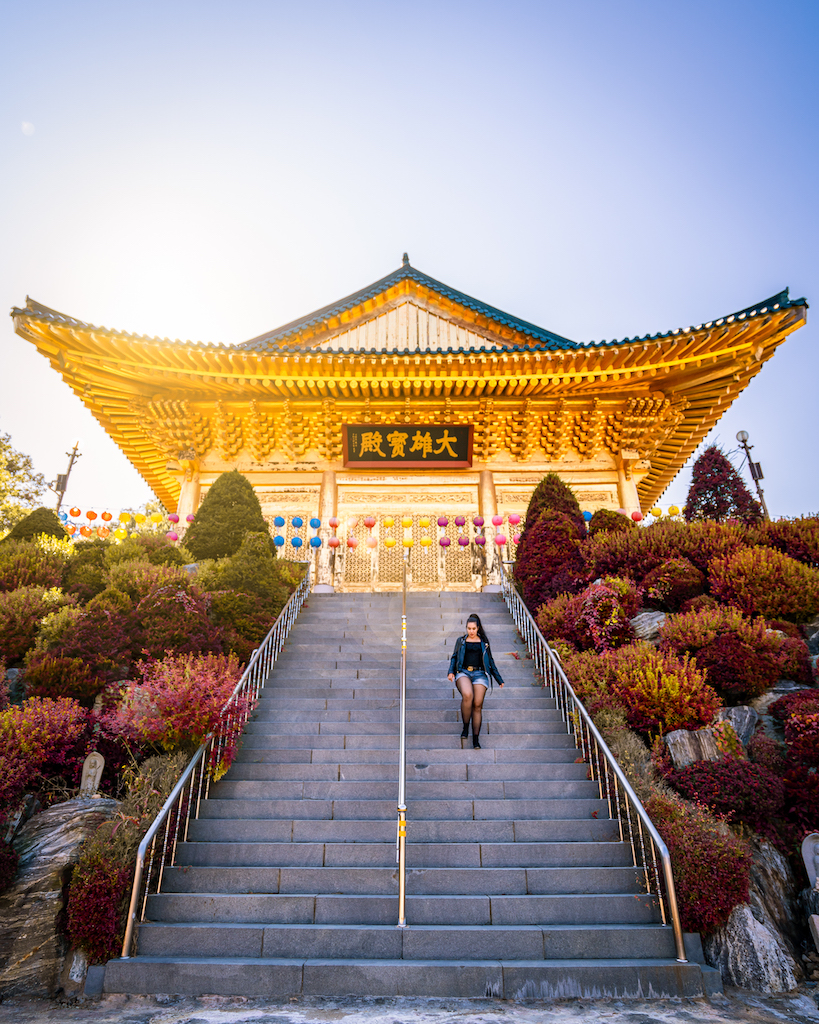
Located along Seoul’s northern edge, Bukhansan is famous for its dramatic granite peaks, forested hiking trails, historic temples, and breathtaking mountain views.
And during autumn? The scenery is absolutely incredible!
The mountains transform into a colorful landscape of fiery red maple trees, golden yellow leaves, and warm orange foliage. Against the park’s rugged granite peaks, the fall colors create some of the most dramatic autumn scenery in the Seoul area.
One of the things I love about hiking in Korea is how accessible the mountains are. You can go from navigating Seoul’s busy subway system to walking through a peaceful forest in what feels like no time at all.
Bukhansan offers hiking trails for different experience levels, from relatively gentle forest walks to challenging routes that require steep climbs and scrambling over rocky terrain.
Baegundae Peak is the park’s highest summit and a popular destination for experienced hikers. However, you don’t need to reach the summit to enjoy beautiful autumn foliage.
Some of the lower trails offer fantastic views of colorful trees, mountain streams, and traditional Buddhist temples without requiring an exhausting climb.
The Bukhansanseong Fortress area is another beautiful place to explore, combining Korean history with mountain scenery.
If you’re visiting Seoul specifically for fall foliage, I recommend setting aside at least half a day to experience Bukhansan properly.
Gina’s Tip: Bukhansan’s foliage often changes earlier than the trees in central Seoul because of its elevation. If you’re visiting in mid-to-late October, this can be a great place to look for autumn colors before the city parks reach their peak. Wear proper hiking shoes, bring water, and check trail conditions before heading out. Some routes have steep granite sections that can become slippery after rain.
How to Get There: Bukhansan has multiple entrances. For the Bukhansanseong area, take Subway Line 3 to Gupabal Station and transfer to a bus toward Bukhansanseong Entrance. Choose your entrance based on the hiking trail you plan to follow.
Admission: Free to enter the national park. Certain facilities or activities may have separate fees.
Best Time to Visit: Mid-to-late October through early November, depending on elevation and weather.
22. Cheonggyecheon Stream (청계천)
Last but definitely not least, Cheonggyecheon Stream is one of the easiest places to enjoy autumn in Seoul without leaving the heart of the city.
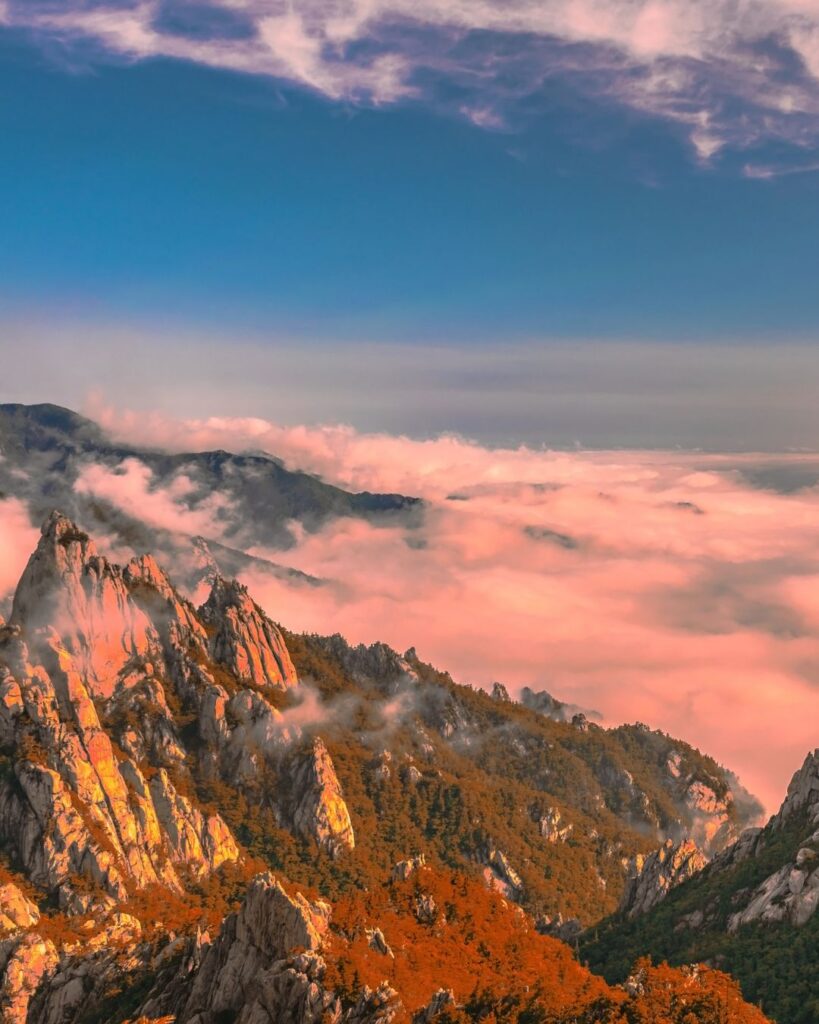
This beautiful urban waterway stretches for approximately 11 kilometers through central Seoul, offering pedestrian paths, small waterfalls, bridges, and peaceful places to relax.
What’s especially interesting about Cheonggyecheon is its history. The stream was once covered by roads and an elevated highway before being restored and reopened to the public in 2005.
Today, it’s one of Seoul’s most recognizable urban regeneration projects and a popular place for both locals and tourists.
During autumn, the trees along portions of the stream turn beautiful shades of yellow and orange, creating a lovely contrast against the surrounding skyscrapers.
As you walk beside the water, you’ll find bridges, stepping stones, public art, and plenty of opportunities to photograph Seoul from a different perspective.
One of the best things about Cheonggyecheon is that you can easily incorporate it into an existing sightseeing itinerary.
If you’re exploring Gwanghwamun, Jongno, or the nearby shopping districts, you can take a relaxing walk along the stream without traveling across the city.
And after spending a day exploring crowded tourist attractions, there’s something really nice about escaping below street level and listening to the sound of running water.
Gina’s Tip: Start near Cheonggye Plaza and walk east along the stream. Look for sections with colorful trees and interesting bridges rather than expecting the entire 11-kilometer route to have the same foliage. The stream is also beautiful after sunset, when parts of the walkway and surrounding buildings are illuminated.
How to Get There: Take Subway Line 5 to Gwanghwamun Station or Lines 1 or 2 to City Hall Station and walk toward Cheonggye Plaza. There are numerous access points along the stream.
Admission: Free.
Best Time to Visit: Late October through early November for autumn foliage. The stream is also a lovely place for an evening walk throughout the season.

Where To See Autumn Foliage Outside of Seoul
Day trips are really popular during peak season for foliage. Korea seriously looks like a Korean drama and some of my favorite places are outside of Seoul.
I recommend reading my blog post on Where To See Fall Foliage in Korea for more amazing places to put on your Korea itinerary.
Frequently Asked Questions About Autumn in Seoul
When is the best time to see autumn foliage in Seoul?
The best time to see autumn foliage in Seoul is typically late October through early November. During this period, the city’s maple trees turn vibrant shades of red and orange, while its famous ginkgo trees transform into beautiful golden-yellow canopies.
Peak foliage varies depending on the weather, elevation, and location. Mountain areas such as Bukhansan National Park generally change color earlier than parks and streets in central Seoul.
Is October or November better for visiting Seoul?
Both months are wonderful for experiencing autumn in Seoul, but early November is generally better for peak fall foliage in the city center.
October typically offers milder temperatures and beautiful seasonal attractions, including silver grass at Haneul Park and cosmos flowers at Olympic Park.
November brings cooler weather, golden ginkgo trees, colorful palace grounds, and some of Seoul’s most spectacular autumn scenery.
If you’re visiting specifically for fall colors, I’d aim for late October through the first week of November.
Where are the best places to see autumn leaves in Seoul?
Some of the best places to see autumn leaves in Seoul include Gyeongbokgung Palace, Changdeokgung Palace, Seoul Forest, Namsan Park, Deoksugung Stonewall Walkway, and Bukhansan National Park.
For beautiful golden ginkgo trees, visit Garosugil, Seoul Forest, or Jogyesa Temple. If you prefer mountain scenery and colorful hiking trails, Bukhansan is an excellent choice.
Where can I see golden ginkgo trees in Seoul?
Seoul has some absolutely gorgeous ginkgo-lined streets and parks that turn bright yellow during autumn.
My recommendations include Deoksugung Stonewall Walkway, Garosugil in Gangnam, Seoul Forest, and Jogyesa Temple.
Ginkgo trees often turn golden later in the season, so late October through early November is generally a good time to look for them.
What is the weather like in Seoul during autumn?
Autumn in Seoul typically brings comfortable daytime temperatures, cooler evenings, and relatively dry weather.
In October, average daytime highs are generally around 19–21°C (66–70°F), while November is noticeably colder, with average highs closer to 11–13°C (52–55°F).
Temperatures can drop significantly after sunset, especially in November, so dressing in layers is essential.
What should I wear in Seoul during autumn?
If you’re visiting Seoul during autumn, I recommend bringing comfortable walking shoes, sweaters, long pants, and a jacket you can easily layer.
October usually calls for lighter layers during the day, while November often requires a warmer coat, especially in the mornings and evenings.
And if you’re planning to hike Bukhansan or explore Seoul’s mountain trails, make sure you wear shoes with good traction.
Trust me, you don’t want to be navigating steep Korean mountain trails in slippery fashion boots!
Can you see autumn foliage in Seoul without hiking?
Absolutely! You don’t need to hike a mountain to enjoy beautiful fall foliage in Seoul.
Some of the easiest places to see autumn leaves include Deoksugung Palace, Deoksugung Stonewall Walkway, Seokchon Lake, Seoul Forest, Cheonggyecheon Stream, and Olympic Park.
These locations have walking paths and are accessible by public transportation, making them excellent options for travelers who prefer relaxed sightseeing.
Is autumn a good time to visit Seoul?
Absolutely! Autumn is one of the most beautiful seasons to visit Seoul thanks to its colorful foliage, comfortable sightseeing weather, seasonal flowers, and outdoor attractions.
It’s an especially wonderful time to explore Seoul’s royal palaces, Buddhist temples, parks, and historic neighborhoods.
However, autumn is also a popular travel season, so expect larger crowds at famous foliage destinations, especially on weekends during peak color.
How many days do you need to experience autumn in Seoul?
I recommend spending at least 5 days in Seoul to enjoy the city’s autumn scenery and explore its major attractions.
With three days, you can visit several beautiful foliage spots such as Gyeongbokgung Palace, Deoksugung Stonewall Walkway, Seoul Forest, and Namsan Park.
If you have five days or more, you’ll have time to explore additional neighborhoods, visit Olympic Park, and potentially spend a day hiking in Bukhansan National Park.
The great thing about Seoul is that many of its best autumn attractions are accessible by subway, so you can easily combine multiple locations in one day.

This post contains affiliate links which means at no additional cost to you, I make a small commission to help keep Globelle Gina running. Thanks for your support!
Free Seoul E-Book
Do you love South Korea?
Enter your name and email address and click the button below to receive your Easy Seoul Travel Guide so you can travel like a local!
Hello, such great photos and information!! My husband and I are planning a trip to Seoul this fall /autumn to see fall foliage. In your opinion, would it be better to travel to Seoul during 10/5 to 10/19 or 11/1 to 11/15, to see the beautiful array of colors? Thank you for any feedback you can provide!