
Originally published September 2020. Updated October 2026.
Wondering where to see fall foliage in Korea? You’re in for a treat! Every autumn, South Korea transforms into a breathtaking landscape of fiery red maple leaves, golden ginkgo trees, and mountains covered in brilliant shades of orange and yellow.
After living in South Korea for nearly six years, I can confidently say autumn is one of my favorite times to explore the country. I’ve spent countless weekends photographing colorful leaves, wandering through historic Korean palaces, hiking scenic trails, and discovering beautiful places that make fall in Korea so magical.
While Seoul has some incredible autumn foliage spots, some of the most spectacular fall colors in Korea can be found beyond the capital. From the dramatic mountain landscapes of Seoraksan National Park to the golden tree-lined paths of Nami Island, there’s no shortage of beautiful destinations to add to your itinerary.
In this guide, I’m sharing 33 of the best places to see fall foliage in Korea. You’ll discover where to find the prettiest autumn scenery, when to visit for peak fall colors, and helpful travel tips for planning your trip.
Because let’s be real… hot girls don’t gatekeep. 🍁
When is the best time to see fall foliage in Korea?
The best time to see fall foliage in Korea is generally from mid-October to early November. However, peak autumn colors vary depending on the region, elevation, and weather conditions.
South Korea’s autumn foliage season typically begins in the northern mountains before gradually spreading south. Higher elevations usually experience changing leaves earlier, while cities and lower-elevation destinations reach peak color later.
Here’s a general guide to planning your Korea fall foliage trip:
| Region | Tyical Peak Foliage |
| Seoraksan and northern mountain regions | Mid to late October |
| Central Korea and mountain destinations | Late October to early November |
| Seoul and surrounding areas | Late October to early November |
| Southern Korea | Late October to mid-November |
These dates are approximate. Peak foliage can shift each year depending on temperatures and seasonal weather patterns.
My travel tip: If you’re visiting Korea specifically for autumn foliage, I recommend planning your trip for the last week of October through the first week of November. This gives you a good opportunity to enjoy colorful leaves around Seoul while also exploring other regions.
For more autumn travel inspiration, check out my Korea fall bucket list, featuring 26 amazing things to do during the season.
Where to see fall foliage in Seoul?
You don’t have to travel far from the capital to experience some of the best fall foliage in Korea. Seoul has beautiful royal palaces, sprawling parks, mountain trails, and tree-lined streets that transform into a sea of red, orange, and yellow every autumn.
During my years living in South Korea, I spent plenty of time exploring Seoul’s autumn photography spots. Whether you want to dress up in a hanbok, enjoy a picnic beneath colorful trees, or hike for panoramic city views, these are some of my favorite places to experience fall foliage in Seoul.
| Destination | Best for |
|---|---|
| Gyeongbokgung Palace | Traditional Korean architecture |
| Seoul Forest | Golden ginkgo trees |
| Nami Island | Romantic tree-lined walks |
| Naejangsan | Red maple foliage |
| Seoraksan | Mountain scenery and hiking |
| Hwadam Forest | Botanical gardens and photography |
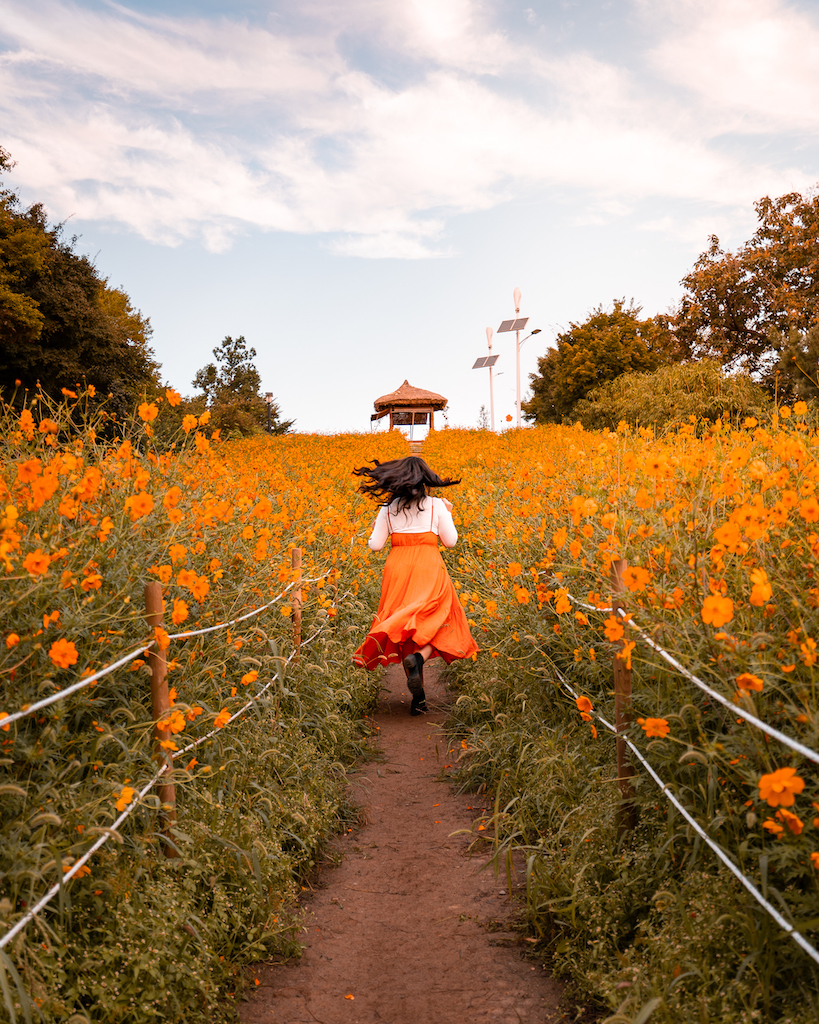
1. Olympic Park
Olympic Park is one of my favorite places to see fall foliage in Seoul. Originally built for the 1988 Summer Olympics, this massive green space is perfect for autumn walks, picnics, and photography.
One of the things I love most about Olympic Park is how many different autumn landscapes you can experience in one visit. The park has tree-lined walking paths, peaceful lakes, and wide-open fields that make it easy to spend several hours exploring.
Some of my favorite photography spots include One Tree Hill (나홀로나무), the Cosmos Garden, and 88 Lake. The golden grasses and seasonal flowers are especially beautiful during autumn, while the surrounding trees add gorgeous shades of yellow and orange.
Travel tip: Olympic Park is huge, so wear comfortable walking shoes and give yourself at least two hours to explore. I recommend visiting on a weekday if you want to avoid the weekend crowds.
Best time for fall foliage: Late October to early November.
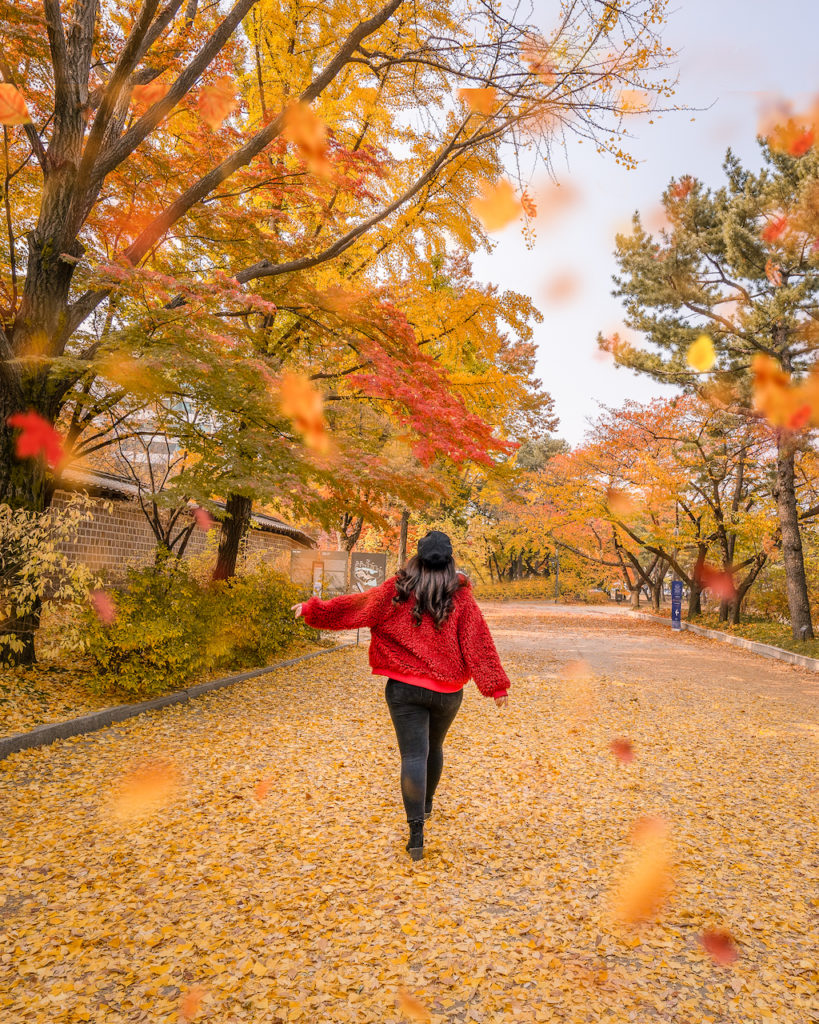
2. Deoksugung
If you’re looking for beautiful fall foliage in Seoul without leaving the city center, Deoksugung Palace should be on your itinerary.
Deoksugung is one of Seoul’s five grand royal palaces and is especially beautiful in autumn when the surrounding ginkgo trees turn brilliant shades of yellow. The contrast between the traditional Korean architecture and golden leaves makes this one of my favorite places for fall photography.
One of the highlights is Deoksugung Stonewall Road (덕수궁 돌담길), a picturesque walking path that follows the palace walls. During autumn, the street becomes especially charming as yellow leaves cover the sidewalks.
I also recommend timing your visit around the royal guard-changing ceremony at the palace entrance. It’s a wonderful opportunity to experience Korean history and culture while exploring one of Seoul’s prettiest autumn destinations.
Travel tip: After exploring the palace, walk along the stonewall road toward Jeongdong-gil. This neighborhood has beautiful architecture, cafes, and additional places to enjoy the autumn scenery.
Best time for fall foliage: Late October to early November.
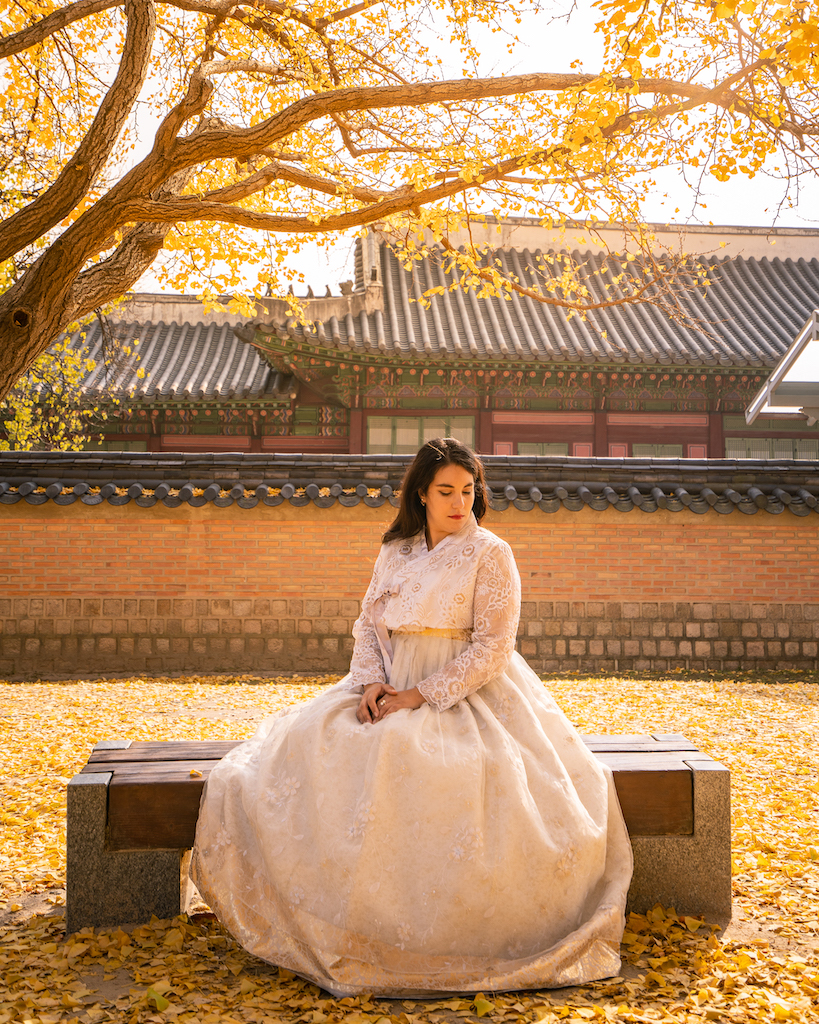
3. Gyeongbokgung Palace
Gyeongbokgung Palace is one of the most iconic places to visit in South Korea, and it’s even more beautiful when the autumn leaves begin changing colors.
As the largest of Seoul’s five grand palaces, Gyeongbokgung offers a stunning combination of traditional Korean architecture, mountain scenery, and colorful fall foliage.
One of my favorite photography locations is Hyangwonjeong Pavilion, a beautiful pavilion surrounded by a pond toward the northern section of the palace grounds. During autumn, the colorful trees create gorgeous reflections in the water, making it one of the prettiest places to photograph fall foliage in Seoul.
For an unforgettable experience, I recommend renting a traditional Korean hanbok. Visitors wearing qualifying hanbok can enter the royal palaces for free, and the colorful autumn scenery makes a stunning backdrop for photos.
Travel tip: Arrive early in the morning to enjoy the palace before the biggest crowds arrive. Gyeongbokgung is closed on Tuesdays, except when holiday arrangements change the schedule.
Best time for fall foliage: Late October to early November.
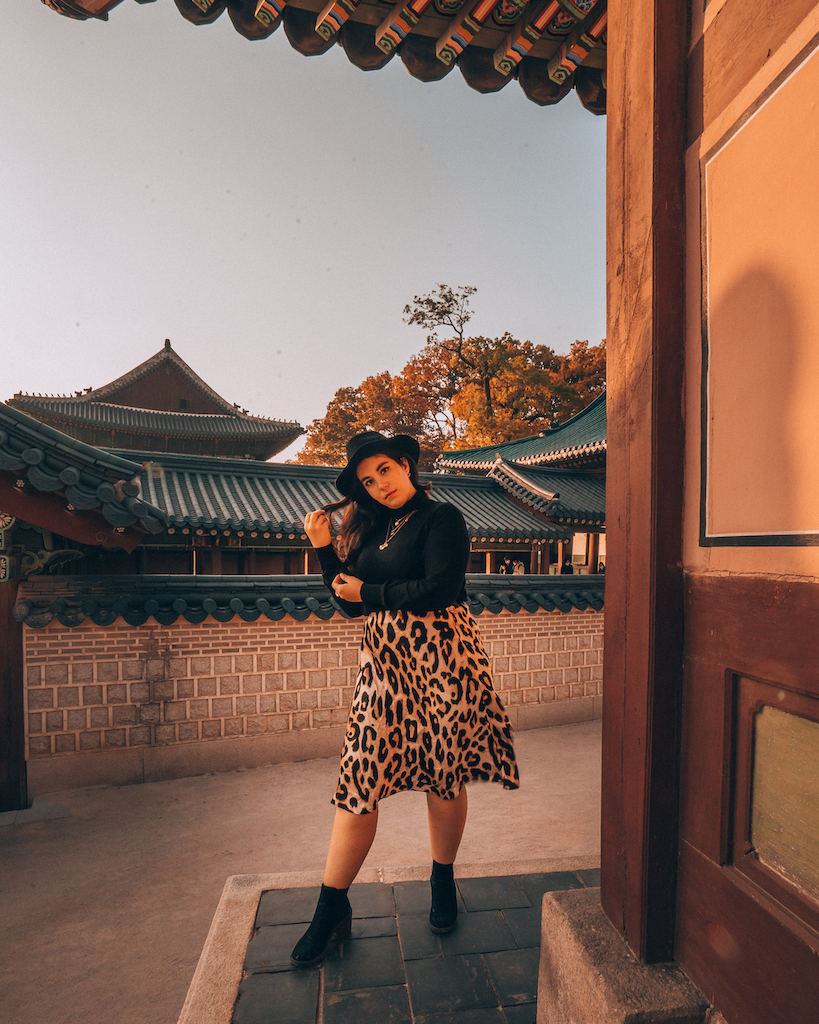
4. Changdeokgung Palace
If I had to recommend one royal palace for experiencing fall foliage in Seoul, Changdeokgung Palace would be near the top of my list.
Changdeokgung is a UNESCO World Heritage Site famous for its beautiful architecture and harmonious relationship with the surrounding natural landscape. However, the real highlight during autumn is Huwon Secret Garden.
The Secret Garden was once reserved for the royal family and features peaceful ponds, traditional pavilions, wooded paths, and some of the most spectacular autumn foliage in Seoul.
During peak foliage season, the maple trees turn vibrant shades of red and orange, while the ginkgo trees create a gorgeous golden canopy. It’s an incredible place to experience the beauty of Korean autumn while learning about the country’s royal history.
Travel tip: Reserve your preferred admission time online in advance (only 50 tickets are available out of 100). Opens at 10:00 AM KST, exactly 6 days before your planned tour date.
Walk-up tickets: Go straight to the main ticket office near the front entrance (Donhwamun Gate / Geumhomun area). The on-site ticket booth opens at 9:00 AM. Morning or popular English/language tour slots frequently sell out early in the day. They hold 50 tickets, and it is on a first-come, first-served basis.
Best time for fall foliage: Late October to early November.
5. Haneul Park
Haneul Park is one of the most beautiful places to experience autumn in Seoul, but it’s a little different from the traditional fall foliage destinations on this list.
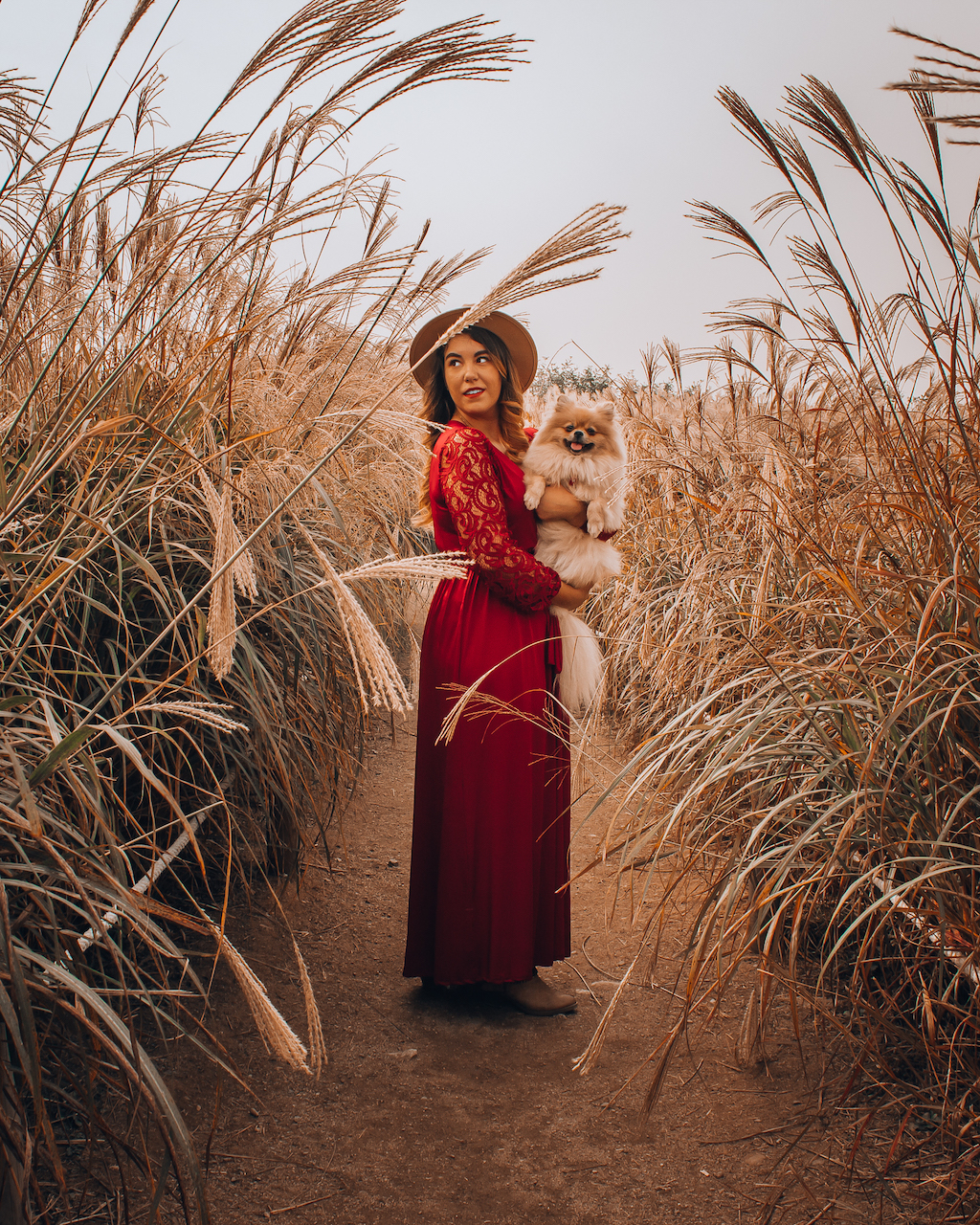
Instead of being famous for red maple leaves and golden ginkgo trees, Haneul Park is best known for its enormous fields of silver grass, also called eulalia.
Every autumn, the tall grasses transform into shimmering waves of silver and gold, creating a dreamy landscape that looks especially beautiful when the sunlight catches them.
I’ve visited Haneul Park during autumn, and walking through the towering silver grass feels like stepping into a movie scene. The park is also located on elevated ground, offering beautiful views of Seoul and the Han River.
Haneul Park is particularly popular during the autumn silver grass season, making it a wonderful addition to your Korea fall itinerary even though it’s not a traditional leaf-peeping destination.
Travel tip: I recommend visiting early in the morning for fewer crowds and beautiful photography conditions. Be prepared for an uphill walk to reach the park, although transport options may be available seasonally.
Best time to visit: October for the silver grass, with nearby foliage colors developing later in autumn.
Autumn in Seoul & South Korea Ebook
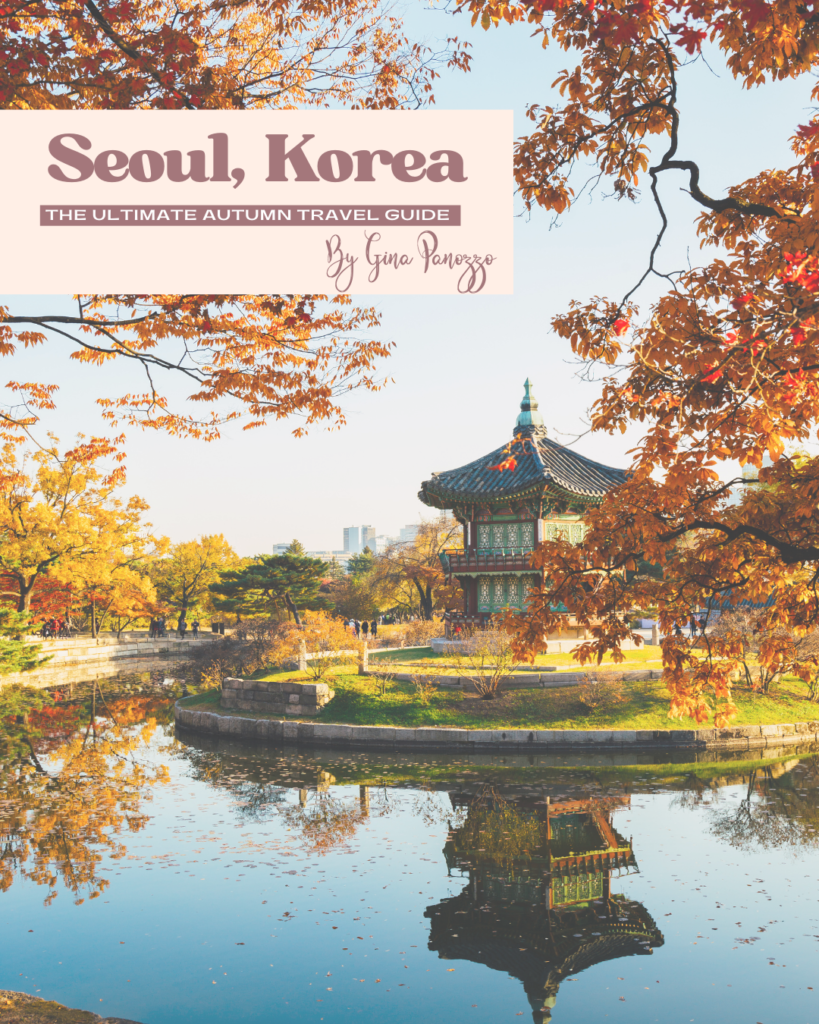
Planning everything yourself can be overwhelming, so I’ve also created an autumn Korea itinerary to help you put everything together.
It includes recommendations for where to stay, what to eat, must-see attractions, transportation, packing tips, photo locations, and other insider advice for planning your trip.
What You Will Get In This E-Book:
🏩 Where to stay in Seoul?
🥘 Best restaurants in Seoul?
🇰🇷 Must-see sites & can’t-miss activities?
🍁What to pack for Korea in autumn?
🚆 What transport do I use to get around the city?
🧧 Plus insider travel tips, photo spots, and deep dives you won’t see on my blog.
6. Seokchon Lake
Seokchon Lake is famous for its cherry blossoms in spring, but don’t sleep on this gorgeous destination during autumn! When the temperatures begin to drop, the trees surrounding the lake turn beautiful shades of orange, yellow, and red, making it one of the prettiest places to see fall foliage in Seoul.
Located in Jamsil beside Lotte World, Seokchon Lake has a scenic walking path where you can admire the colorful leaves reflected in the water. The contrast between the autumn trees, Lotte World Magic Island, and the surrounding skyscrapers makes this a particularly unique photography location.
One of my favorite photography tips is to explore the upper walkway rather than sticking to the path directly beside the lake. That’s where I took my photo! I also recommend checking out Knotted World Cafe at Lotte World Mall for an elevated perspective of the surrounding scenery.
Travel tip: Combine your visit with Lotte World Tower, Lotte World Mall, or a walk through the surrounding Jamsil neighborhood. Seokchon Lake is easily accessible from Jamsil Station on Seoul Subway Lines 2 and 8.
Best time for fall foliage: Late October to early November.

7. Seoul Forest
If you’re looking for a peaceful escape from Seoul’s busy streets, Seoul Forest is one of the best places to experience autumn in the city. This sprawling urban park is especially popular with locals who come to picnic, cycle, and enjoy the outdoors before Korea’s chilly winter arrives.
During autumn, the park transforms into a beautiful landscape of golden ginkgo trees, colorful Korean maples, and tree-lined walking paths. There’s plenty of space to explore, making it an excellent destination for a leisurely afternoon surrounded by nature.
One of the highlights is the park’s ginkgo tree area, where the leaves create a gorgeous golden canopy during peak foliage season. You’ll also find scenic gardens, ponds, and wooded paths that provide plenty of opportunities for autumn photography.
What makes Seoul Forest particularly appealing is its location near Seongsu-dong, one of Seoul’s trendiest neighborhoods. After enjoying the fall colors, you can spend the rest of your afternoon exploring independent cafes, boutiques, and restaurants.
Travel tip: Take the Suin–Bundang Line to Seoul Forest Station. I recommend setting aside at least two hours to explore the park, especially if you’re planning to take photos.
Best time for fall foliage: Late October to early November.

8. Namsan Park & N Seoul Tower
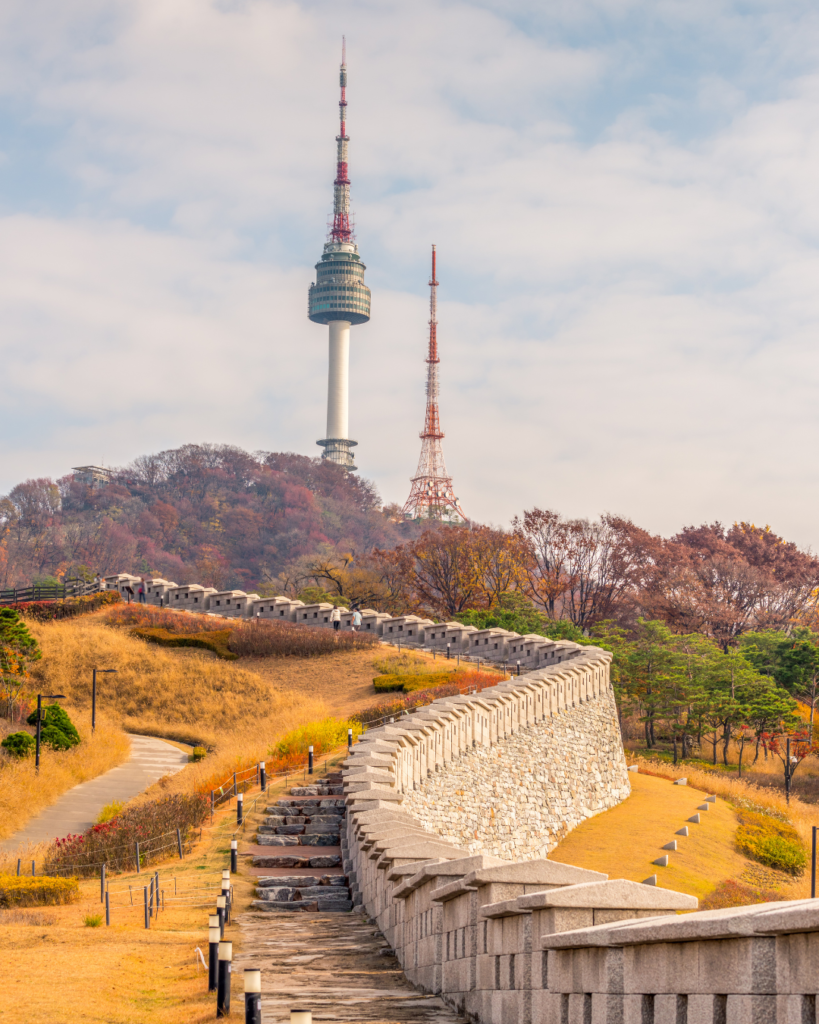
Want to see Seoul’s autumn foliage from above? Namsan Park and N Seoul Tower offer some of the most spectacular views of the city surrounded by colorful fall leaves.
Located in the heart of Seoul, Namsan Mountain is covered in trees that transform into brilliant shades of red, orange, and yellow during autumn. The combination of colorful mountainside foliage and Seoul’s sprawling skyline makes this one of the most memorable places to experience fall in Korea.
There are several ways to enjoy the scenery. If you’re feeling adventurous, I recommend hiking down Namsan Mountain. The walking paths offer plenty of opportunities to stop, admire the changing leaves, and photograph the city from different viewpoints.
If hiking isn’t your thing, take the Namsan Cable Car for an aerial view of the autumn colors. Once you reach the top, you can explore the area surrounding N Seoul Tower or visit the observation deck for panoramic views of the capital.
Personally, I think the journey up the mountain is just as beautiful as the view from the top. There’s something magical about seeing Seoul framed by colorful autumn trees.
Travel tip: Visit in the late afternoon to enjoy the foliage in daylight and stay for sunset. Bring a jacket because the mountain can feel noticeably cooler once the sun goes down.
Best time for fall foliage: Late October to early November.
9. Yongma Land
Looking for a unique autumn photography spot in Seoul? Yongma Land is one of the quirkiest places I’ve explored in Korea, especially during the Halloween season.
This abandoned amusement park has become a popular photography location thanks to its vintage rides, colorful attractions, and slightly eerie atmosphere. Instead of the perfectly manicured gardens and traditional Korean palaces you’ll find elsewhere on this list, Yongma Land offers something completely different.
I loved this place so much that I returned almost every year to take autumn photos! The old carousel, weathered amusement park rides, and surrounding seasonal scenery create a wonderfully nostalgic backdrop.
Yongma Land isn’t a traditional fall foliage destination, and I wouldn’t recommend visiting solely to see changing leaves. However, if you love creative photography, abandoned amusement park aesthetics, or spooky autumn vibes, it’s a fun addition to your Seoul itinerary.
Travel tip: Check whether Yongma Land is currently accepting visitors before making the journey. Access arrangements can change, and this isn’t a conventional operating amusement park. Bring a camera and plan your outfits if you’re hoping to take themed photographs.
Best time to visit: October through early November for autumn-themed photography.

10. Bukhansan National Park
If you want to experience some of the most spectacular fall foliage in Korea without traveling far from Seoul, Bukhansan National Park deserves a spot on your itinerary.
Bukhansan is one of the most popular hiking destinations in South Korea, and it’s easy to understand why. The national park is famous for its dramatic granite peaks, forested valleys, historic Buddhist temples, and breathtaking views overlooking Seoul.
Hiking is practically a national pastime in Korea, and you’ll quickly notice how seriously the locals take it. Expect to encounter plenty of older Korean hikers dressed head to toe in outdoor gear, carrying backpacks filled with snacks, homemade food, and makgeolli, Korea’s traditional rice wine!
One of the wonderful things about Bukhansan is that you don’t necessarily need to tackle its most challenging summit trails to enjoy the autumn scenery. Lower-elevation forest paths and temple routes also offer beautiful opportunities to admire the changing leaves.
For experienced hikers, the mountain’s higher trails provide incredible panoramic views, but some routes involve steep granite sections and require proper footwear and preparation.
Travel tip: Start your hike early, especially on autumn weekends when the park gets extremely busy. Wear hiking shoes with good traction, carry plenty of water, and choose a trail that matches your fitness and hiking experience.
Best time for fall foliage: Mid to late October, sometimes extending into early November at lower elevations.
Where To See The Best Autumn Foliage in Korea?
Now we’re getting into the meat and potatoes of the best fall foliage in Korea. Honestly, there’s so many gorgeous spots, I should totally write a book about it!
Oh wait! I did. If you want a completely done-for-you Fall Foliage trip to Korea then you need to get my e-book!
11. Yangju Nari Park and Pink Muhly
If you’re looking for a dreamy autumn photography location near Seoul, Yangju Nari Park (양주 나리공원) deserves a spot on your Korea fall itinerary! Yangju Nari Farm’s 2026 autumn season runs from September 18th to October 25th.
Located in Yangju, Gyeonggi Province, this seasonal flower park is famous for its enormous fields of pink muhly grass, globe amaranth, and other colorful autumn flowers. During peak blooming season, the landscape transforms into a gorgeous sea of pink, purple, and red.
What makes Yangju Nari Park so special is how different it looks from traditional fall foliage destinations. Instead of hiking through forests of red maple trees and golden ginkgo leaves, you’ll find yourself wandering between beautifully arranged flower fields that practically beg to be photographed.
It’s a wonderful place to experience Korea’s autumn flower season.
Travel tip: Yangju Nari Park is outside central Seoul, so allow extra time for transportation. Seasonal opening dates and flower conditions vary each year, so check the park’s operating schedule before visiting. Stay on designated paths to protect the flower beds.
Best time to visit: Late September through October for autumn flowers, depending on the season.
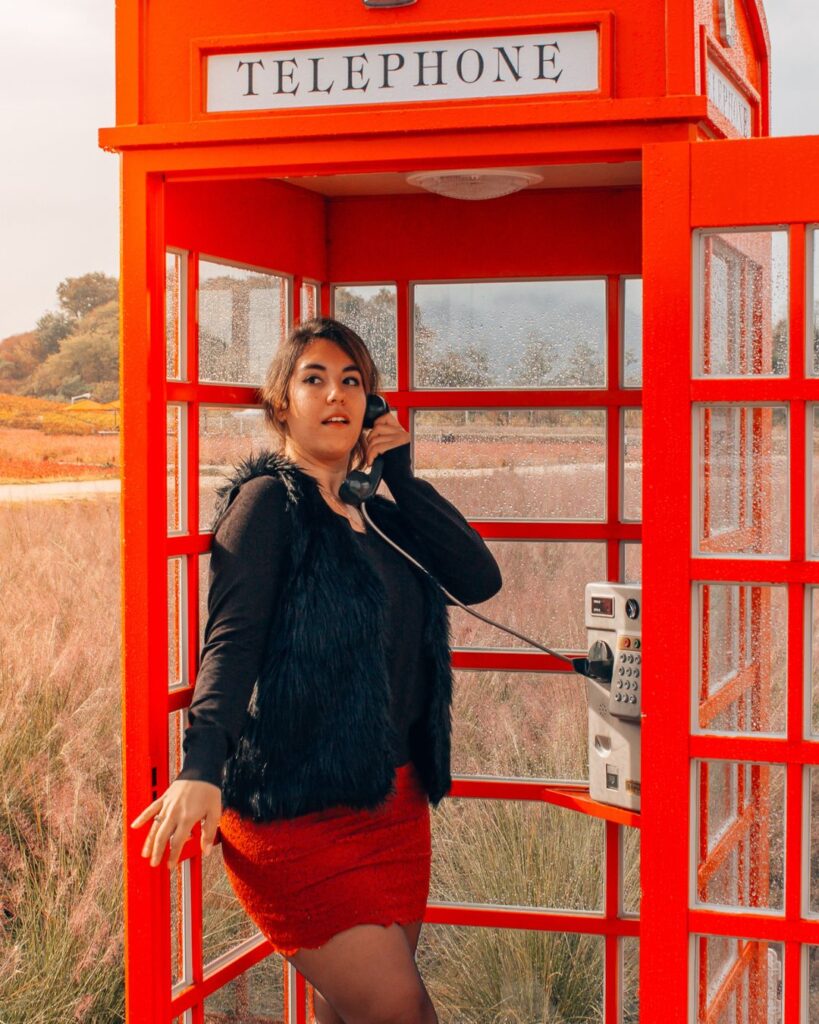
12. Namhansanseong
If you love Korean history as much as beautiful autumn scenery, Namhansanseong Provincial Park (남한산성도립공원) is one of the best places to enjoy fall foliage near Seoul.
Located southeast of the capital, Namhansanseong is home to a historic mountain fortress recognized as a UNESCO World Heritage Site. Its impressive stone walls wind through the mountains, offering incredible views of the surrounding forests and Seoul’s skyline in the distance.
The official heritage center also lists autumn cultural events running on selected weekends and holidays through October 25, 2026.
One of the things I love about visiting historic sites in Korea is how naturally they blend architecture with the surrounding landscape. Namhansanseong is a perfect example, with its ancient gates, wooded trails, and panoramic viewpoints.
You don’t have to complete an especially difficult hike to appreciate the scenery. There are several walking routes around the fortress, although some sections involve hills, stairs, and uneven stone paths.
Travel tip: Wear comfortable shoes with good traction and give yourself several hours to explore. If you enjoy photography, visit on a clear day when you can capture the fortress walls surrounded by colorful autumn foliage.
Best time for fall foliage: Late October to early November.

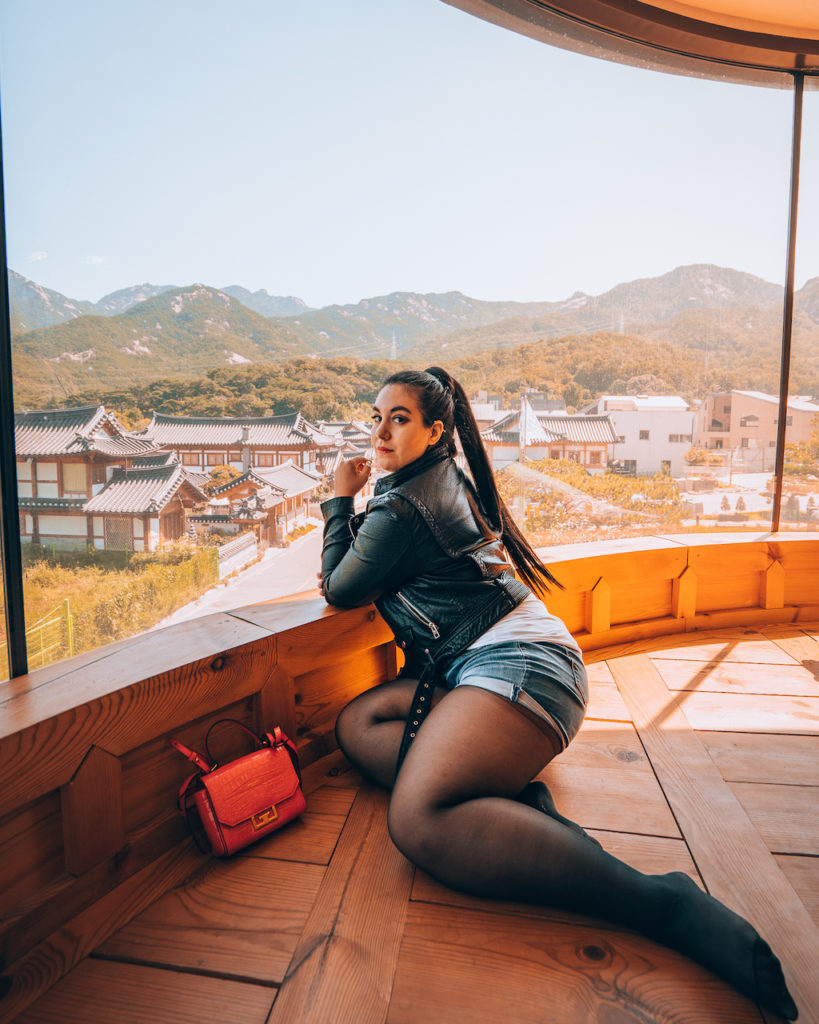
13. Eunpyeong Hanok Village
If you want to experience traditional Korean architecture surrounded by gorgeous autumn scenery, Eunpyeong Hanok Village (은평한옥마을) is a beautiful place to visit in Seoul.
Unlike the bustling streets of Bukchon Hanok Village, Eunpyeong offers a quieter atmosphere with traditional-style Korean houses (hanok) set against the dramatic backdrop of Bukhansan Mountain.
During autumn, the surrounding mountains become covered in shades of red, orange, and yellow, creating a beautiful contrast with the dark tiled roofs and wooden details of the hanok buildings.
One of the best things about Eunpyeong Hanok Village is the opportunity to photograph traditional Korean architecture with the mountains rising behind it. The scenery is especially striking during peak fall foliage season, when the forested slopes are filled with color.
While you’re there, I recommend stopping at one of the neighborhood’s cafes for a drink and a view. (Cafe 1인1잔 is the best!) Some offer elevated seating areas where you can admire the hanok rooftops and mountains without having to go hiking.
You can also combine your visit with Jingwansa Temple, located nearby at the foot of Bukhansan Mountain. It’s a wonderful way to experience traditional Korean culture and peaceful autumn scenery in the same afternoon.
Travel tip: Eunpyeong Hanok Village is a residential neighborhood, so be respectful of residents and avoid photographing private homes up close. Public transportation generally involves taking the subway followed by a local bus.
Best time for fall foliage: Late October to early November.
14. Suwon Hwaseong Fortress
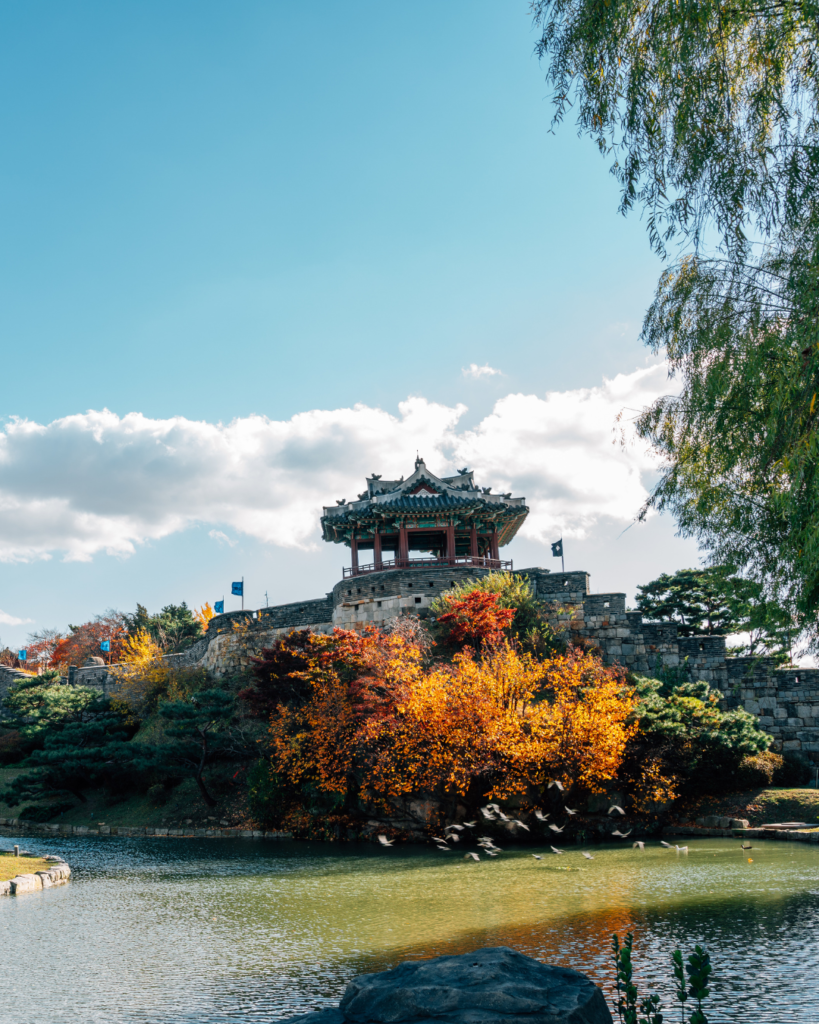
Suwon Hwaseong Fortress (수원화성) is one of my favorite places to recommend for travelers who want to combine Korean history, beautiful architecture, and autumn foliage on a day trip from Seoul.
Located in Suwon, Gyeonggi Province, this UNESCO World Heritage Site was constructed during the reign of King Jeongjo in the late 18th century. The impressive fortress walls stretch across the city, connecting historic gates, observation points, and scenic walking paths.
One of the highlights is the area around Banghwasuryujeong Pavilion and Yongyeon Pond. The pavilion overlooks a peaceful body of water, creating a beautiful setting for photos, especially when the surrounding trees begin changing colors.
You can also visit Hwaseong Haenggung Palace and explore the cafes and shops in the surrounding neighborhoods.
Travel tip: Suwon is accessible from Seoul by public transportation, making it a manageable day trip. Give yourself at least half a day to explore the fortress and surrounding attractions. Wear comfortable shoes because the fortress grounds cover a large area and include some steep sections.
Best time for fall foliage: Late October to early November.
15. Byeokjoji Gardens Paju
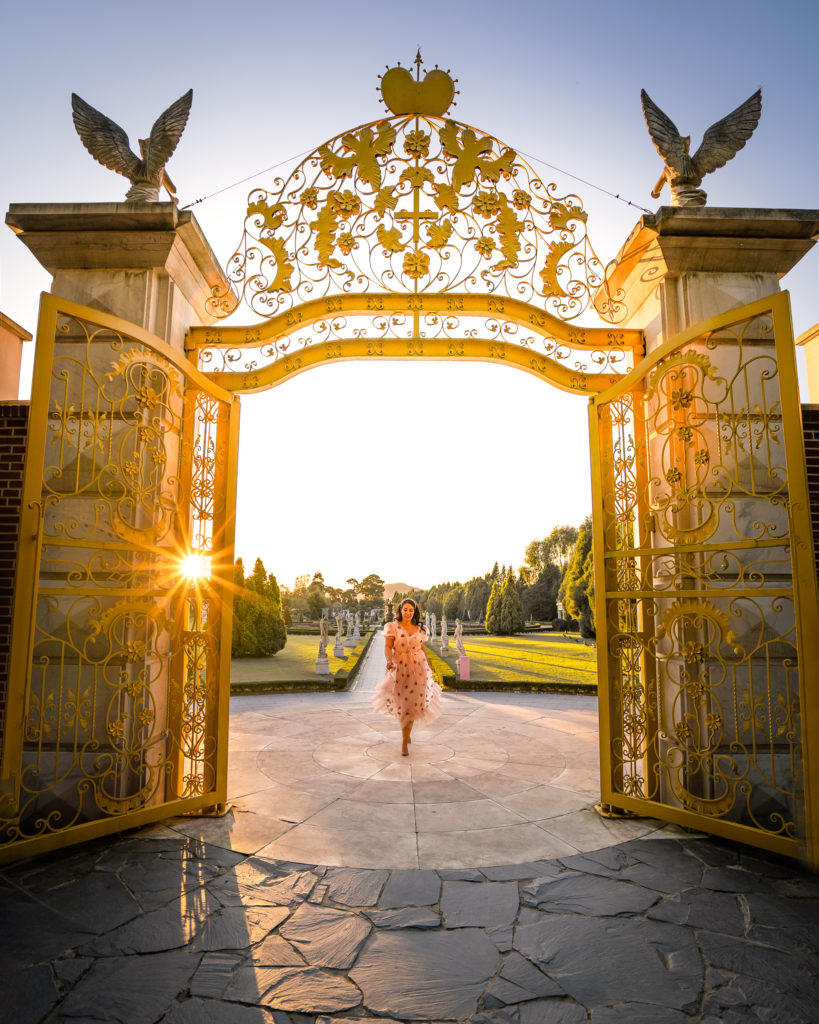
If you’re searching for a romantic autumn garden near Seoul, Byeokchoji Gardens (벽초지수목원) in Paju is a beautiful destination to add to your Korea fall foliage itinerary. The best way to get there is to rent a car.
This landscaped botanical garden combines traditional Korean garden design with elegant European-inspired spaces, creating a variety of beautiful settings to explore throughout the seasons.
Byeokchoji Gardens have a variety of peaceful water features, carefully maintained gardens, picturesque pathways, and architectural details that make the grounds feel almost like something out of a fairy tale.
The garden has also attracted attention as a filming location for Korean dramas, making it especially appealing to travelers who enjoy visiting beautiful K-drama-inspired destinations.
Unlike some of Korea’s mountain foliage destinations, Byeokchoji is more about enjoying a relaxing garden stroll than completing a strenuous hike. It’s a lovely option for couples, photographers, and anyone who wants to enjoy autumn scenery at a slower pace.
Travel tip: Byeokchoji Gardens is located in Paju, northwest of Seoul. Public transportation can require transfers, so plan your route ahead of time. Check the garden’s current admission fees and seasonal opening hours before visiting.
Best time for fall foliage: Late October to early November.
16. Korean Folk Village
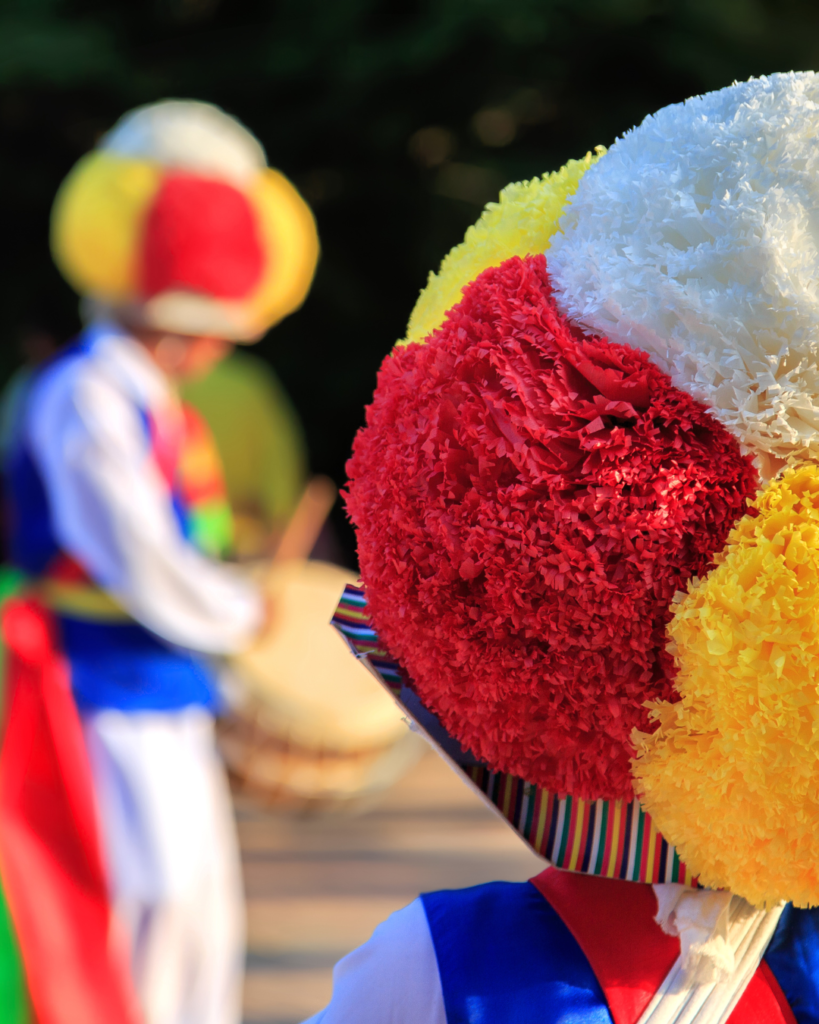
The Korean Folk Village (한국민속촌) in Yongin is one of those places where you can spend an entire day immersed in Korean history and culture. The village recreates life during the Joseon Dynasty with traditional hanok houses, workshops, folk performances, and costumed characters.
But here’s where things get interesting. Every autumn, the village embraces its spooky side with Halloween-themed experiences inspired by Korean folklore and ghost stories.
I’ve visited during the Halloween season, and one of the most entertaining parts is seeing actors dressed as supernatural characters from Korean urban legends. They’ll even pose for photos, which makes the experience especially fun if you love Halloween as much as I do.
Beyond the seasonal festivities, the village’s traditional architecture and wooded surroundings make it a lovely place to explore during autumn. You can experience Korean culture, enjoy the outdoor scenery, and learn about some seriously creepy folklore in one visit.
Travel tip: Korean Folk Village is located in Yongin, roughly an hour or more from central Seoul depending on your transportation. Check the seasonal event calendar before visiting because Halloween programming and special performances can change each year.
17. Everland Amusement Park
In my not-so-humble opinion, autumn is the best time to visit Everland (에버랜드), South Korea’s largest theme park. And not just because of the weather. Everland goes ALL OUT for Halloween.
Located in Yongin, Everland transforms parts of the park into elaborate Halloween-themed attractions, complete with pumpkins, eerie decorations, costumed performers, and seasonal entertainment.
One of the biggest draws is the park’s horror programming. In previous seasons, attractions have included the Horror Maze and other haunted experiences designed to scare the living daylights out of visitors. If you enjoy a good jump scare, this is absolutely your kind of place.
Of course, there’s more to Everland than Halloween. The park also has gardens, themed areas, and T-Express, its famous wooden roller coaster. Autumn’s cooler temperatures make spending a full day outdoors much more enjoyable than during Korea’s humid summer.
While Everland isn’t primarily a destination for leaf-peeping, it’s one of my recommendations for travelers who want to mix autumn activities with theme park thrills.
Travel tip: Set aside an entire day for Everland. Popular rides can have long queues, especially on weekends and during seasonal events. Check the official Halloween schedule before booking because individual horror attractions and admission arrangements vary by year.

18. Hwadam Botanic Garden
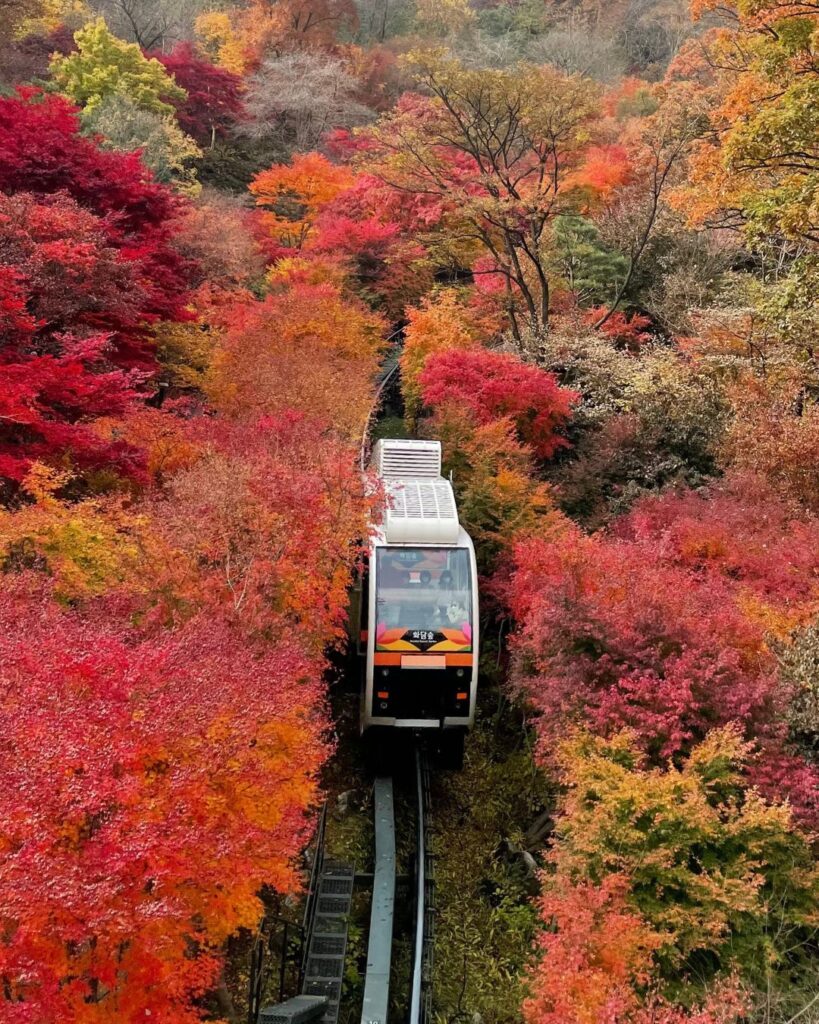
Hwadam Forest (화담숲), sometimes called Hwadam Botanic Garden, is one of South Korea’s most sought-after autumn foliage destinations. Located in Gwangju, Gyeonggi Province, this expansive botanical garden is famous for its forested hillsides, carefully maintained walking paths, and spectacular seasonal scenery.
What makes Hwadam Forest especially appealing is the way its gardens have been designed around the natural mountain landscape. Visitors can follow winding paths through different botanical collections, passing ponds, wooden bridges, and forests filled with Japanese maples and other deciduous trees.
One of its most recognizable features is the monorail, which travels through sections of the hillside gardens. It’s a popular way to experience the scenery, particularly for visitors who don’t wanna walk the entire route.
Hwadam Forest is also known for its impressive collection of maple trees. When autumn reaches its peak, the gardens become one of the most photographed foliage locations near Seoul.
Hwadam offers a more curated botanical garden experience, making it especially appealing to travelers interested in nature photography and leisurely sightseeing.
Travel tip: Autumn admission is extremely popular and may require advance reservations. Check the official Hwadam Forest website for ticket releases, monorail availability, and seasonal operating dates. It’s best to secure admission before arranging transportation from Seoul.
Best time for fall foliage: Late October to early November, depending on the year’s weather.
19. Asan Gingko Tree Road
Imagine walking beneath hundreds of towering ginkgo trees while golden leaves blanket the road beneath your feet. That’s the appeal of Asan Ginkgo Tree Road (아산 은행나무길), one of Korea’s most recognizable autumn photography destinations.
Located in Asan, Chungcheongnam-do Province, this famous tree-lined road follows the Gokgyocheon Stream. Its long rows of mature ginkgo trees create a striking yellow canopy when the leaves change color.
Unlike Korea’s mountain destinations, where autumn foliage appears in a mixture of colors, Asan is all about gold. The visual effect is particularly impressive when the trees reach peak color and fallen leaves cover the walking paths.
Asan makes an interesting addition to a South Korea autumn itinerary, particularly if you’re exploring destinations outside Seoul or traveling through the country’s central region.
Travel tip: Asan is accessible by train from Seoul. You’ll need additional local transportation to reach the ginkgo road. Plan your visit around the changing leaves rather than a fixed calendar date, since ginkgo trees can lose their foliage quickly after strong winds or heavy rain.
Best time for fall foliage: Late October to early November.

20. Pocheon Art Valley
Pocheon Art Valley (포천아트밸리) has one of the most unusual landscapes you’ll find on a day trip from Seoul. What was once an abandoned granite quarry has been transformed into a cultural attraction featuring dramatic rock formations, outdoor sculptures, and a striking emerald-colored lake.
The centerpiece is Cheonjuho Lake, surrounded by steep granite cliffs left behind by the quarrying process. The combination of exposed stone, still water, and the surrounding wooded hills gives Pocheon Art Valley a completely different atmosphere from Korea’s traditional gardens and palaces.
The site has also appeared in Korean dramas, including Moon Lovers: Scarlet Heart Ryeo, making it a recognizable location for K-drama fans.
Autumn adds another dimension to the landscape as the trees surrounding the former quarry begin changing color. However, the main attraction here is the dramatic lake and cliff scenery rather than extensive forest trails.
Visitors can explore the cultural spaces, admire the quarry lake from designated viewpoints, and take advantage of the site’s monorail to reach the upper attractions.
Pocheon is also known for its agricultural landscapes, including apple orchards. Some seasonal day tours combine Pocheon Art Valley with apple picking, offering a fun way to experience Korea’s autumn harvest.
Travel tip: Pocheon Art Valley is located northeast of Seoul, and reaching it independently by public transportation can involve multiple transfers. A rental car or organized day tour may be more convenient, especially if you’re combining the visit with other Pocheon attractions.
Best time to visit: October through early November for autumn scenery. Apple-picking availability depends on the orchard and harvest season.

21. Garden of Morning Calm
The Garden of Morning Calm (아침고요수목원) is a botanical garden nestled in the mountains of Gapyeong, Gyeonggi Province. Inspired by the natural beauty of the Korean Peninsula, the garden was designed to showcase traditional Korean landscaping through carefully arranged plants, winding pathways, and peaceful outdoor spaces.
Spread across approximately 30,000 square meters, the garden features more than 20 themed sections, each with its own atmosphere. Some areas emphasize traditional Korean garden design, while others incorporate colorful flower beds, ponds, and landscaped lawns.
One of the most recognizable areas is the Sunken Garden, where seasonal flowers and landscaped pathways are framed by the surrounding hills. It’s worth exploring beyond the main garden, though, because some of the quieter paths offer equally lovely views.
Travel tip: The Garden of Morning Calm is often combined with Nami Island on a day trip from Seoul. The Gapyeong City Tour Bus has historically connected several major attractions in the area, but check current routes and schedules before relying on it.
Best time for fall foliage: Late October to early November.
22. Nami Island
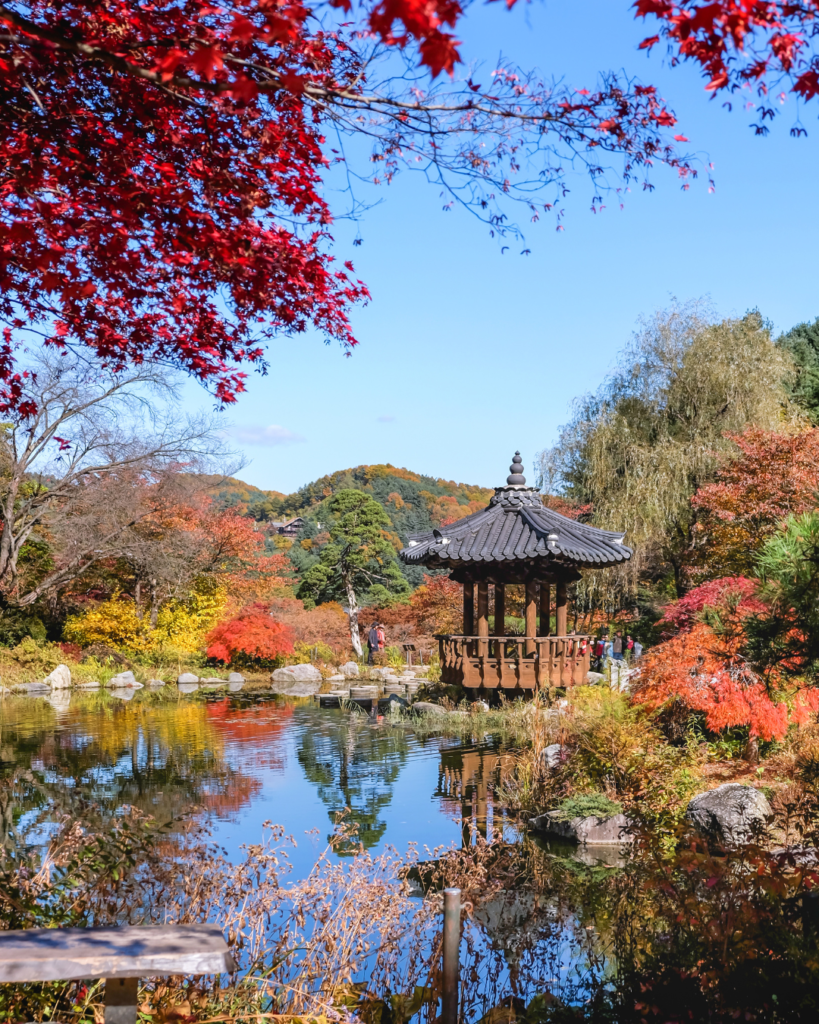
Few places capture the romance of autumn in Korea quite like Nami Island (남이섬). Located in the Bukhangang River near Chuncheon, this small, crescent-shaped island is famous for its tree-lined avenues, peaceful walking paths, and connection to the beloved Korean drama Winter Sonata.
Nami Island is beautiful throughout the year, but autumn gives it an entirely different personality. The island’s towering metasequoia trees turn warm shades of copper, while its ginkgo-lined paths become brilliant yellow.
The Gingko Tree Lane is one of the island’s most recognizable autumn spots. When the leaves begin falling, the pathway becomes covered in gold, creating the kind of scenery that makes you want to stop every few steps to take another picture.
Travel tip: Most visitors reach Nami Island by ferry from Gapyeong Wharf, although a zipline option may also be available. Arrive early if you want photographs without large crowds, particularly on autumn weekends.
Best time for fall foliage: Late October to early November.
23. Baekyangsa Temple
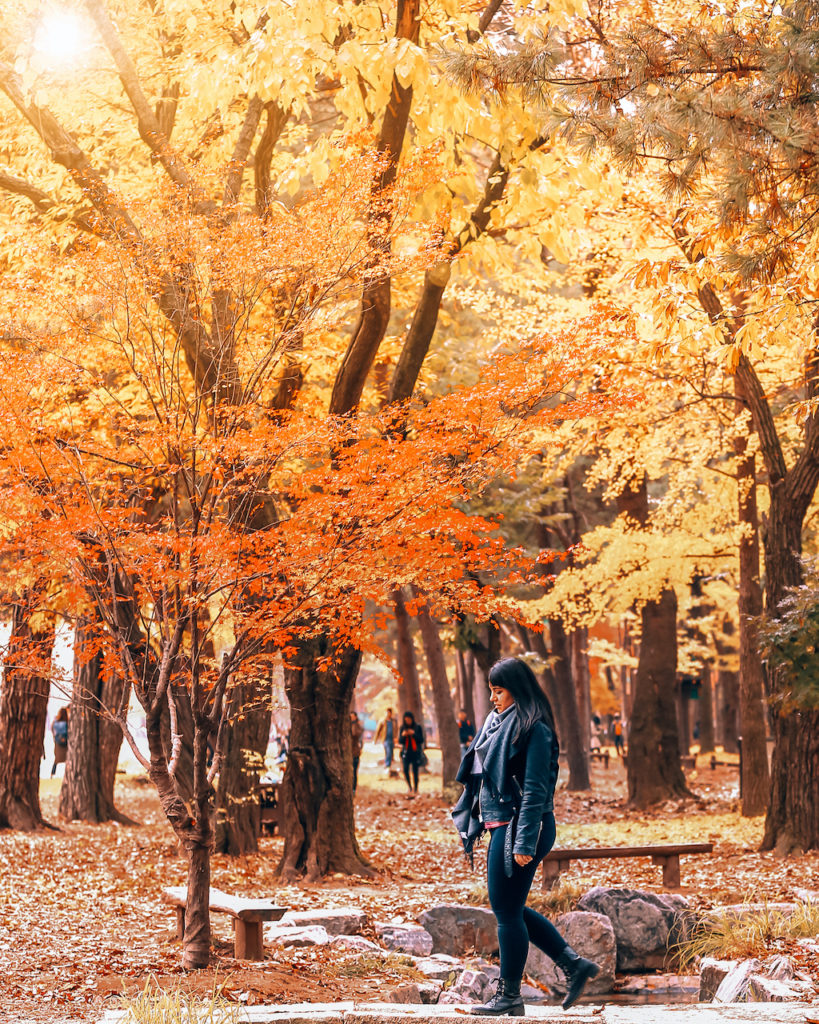
Baekyangsa Temple (백양사) is one of the most picturesque Buddhist temples in South Korea, especially during autumn. Tucked into the mountains of Jangseong in Jeollanam-do Province, this historic temple is surrounded by forested slopes that become a spectacular display of seasonal color.
The temple is particularly famous for its small maple trees, known as aegidanjang. Their delicate leaves turn brilliant shades of red during autumn, drawing photographers and visitors from across the country.
One of Baekyangsa’s most iconic views is Ssanggyeru Pavilion reflected in the water beneath it. When the surrounding maples reach peak color, the pavilion, pond, and mountain backdrop create a scene that looks almost like a traditional Korean painting.
Baekyangsa is located within Naejangsan National Park. It’s in the Baegamsan section, not the main Naejangsan temple area.
Travel tip: Baekyangsa is especially popular with photographers during peak foliage season. Early morning can offer calmer conditions for reflections on the water, although mist and lighting depend on the weather.
Best time for fall foliage: Late October to early November.
24. Naejangsan
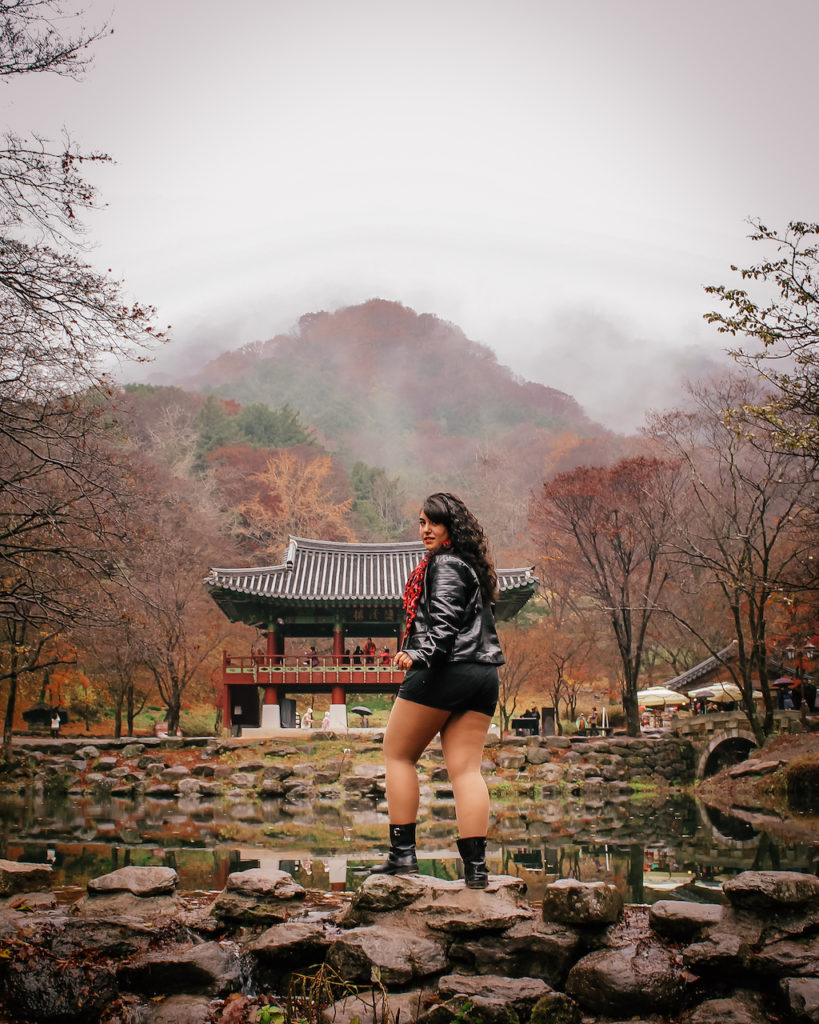
Naejangsan National Park (내장산국립공원) is one of South Korea’s most famous autumn foliage destinations, and for good reason. Located primarily in Jeollabuk-do, now officially called Jeonbuk State, the park is celebrated for its extraordinary concentration of maple trees.
While many Korean mountains are covered in a mixture of evergreen and deciduous forests, Naejangsan is especially famous for the intensity of its autumn reds. During peak foliage season, the valleys and mountain slopes become a vivid patchwork of crimson, orange, and gold.
One of the park’s signature experiences is walking along the tree-lined approach to Naejangsa Temple. The route is famous for its maple canopy, which creates a tunnel of colorful leaves during autumn.
Naejangsan also has a cable car that carries visitors partway up the mountainside. From the upper area, you can explore viewpoints and appreciate the scale of the autumn landscape.
For travelers who enjoy hiking, the national park has more demanding mountain trails, but you don’t need to climb to the highest peaks to experience its famous foliage. The valley paths and temple surroundings are attractions in their own right.
Travel tip: Naejangsan gets extremely crowded during peak foliage season, especially on weekends. Arrive early and allow extra time for transportation, entrance queues, and walking between attractions. Some mountain trails are steep, so choose your route according to your experience.
Best time for fall foliage: Late October to early November, sometimes extending into mid-November depending on the weather.
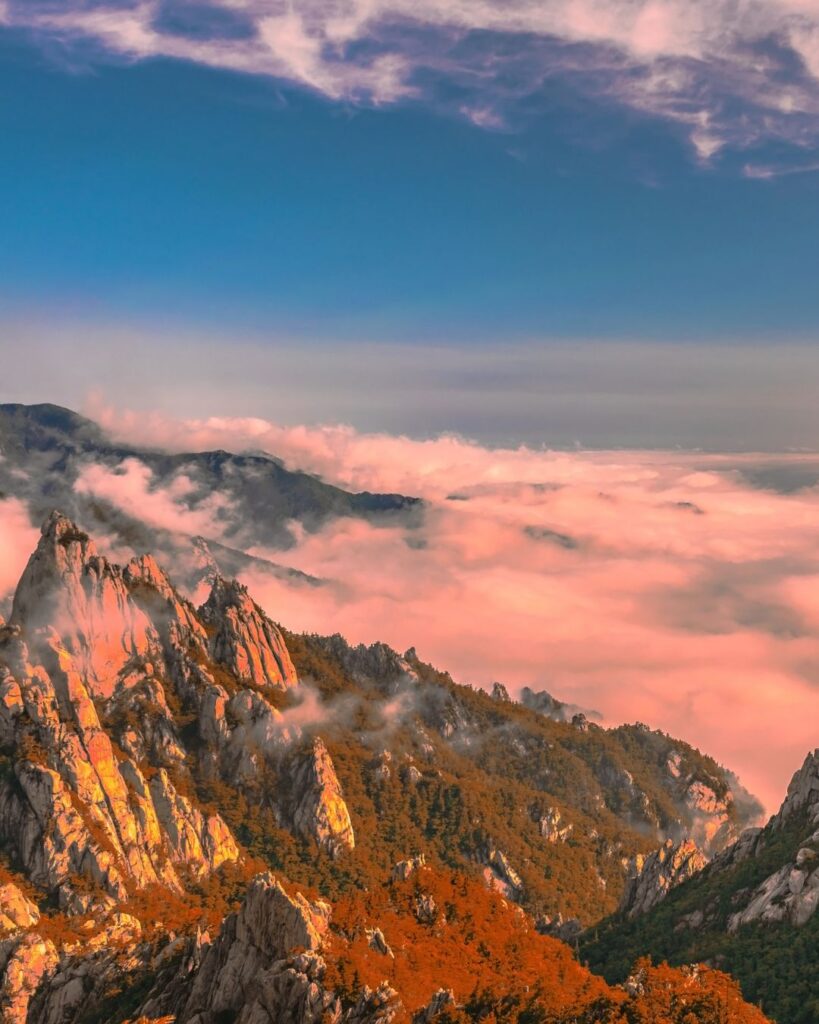
One of the best ways to travel around Korea is via tour groups. Many tour companies specialize in helping foreigners, so if you want to see the gorgeous fall foliage on this mountain, the best way to do it is to book a tour.
I’ve been to Naejangsan in Autumn before and it’s seriously as pretty as this photo. Located in Korea’s southern province Jeollabuk-do, this mountain literally becomes red in fall. There’s so many picturesque places.

25. Bohyeonsa Temple Stay
For a completely different way to experience autumn in Korea, consider spending a night at Bohyeonsa Temple (보현사) in Gangneung.
A Korean temple stay offers something you won’t find on a typical sightseeing itinerary: the opportunity to temporarily step away from everyday life and experience aspects of Buddhist monastic culture.
Depending on the program, temple stays may include meditation, traditional Buddhist ceremonies, communal meals, and opportunities to learn about the daily routines of Korean monks and nuns.
Bohyeonsa is located in the mountains near Gangneung, surrounded by wooded landscapes that become especially atmospheric during autumn. Rather than rushing between photography spots, a temple stay allows you to experience the changing season at a slower pace.
There’s something particularly memorable about waking up in the mountains, breathing in the cool autumn air, and hearing the sounds of a temple beginning its day.
Temple stays can also provide insight into Korean Buddhist customs, including temple etiquette, vegetarian monastic meals, and the practice of mindfulness.
Travel tip: Temple stay programs vary in length, activities, and availability. Pack modest, comfortable clothing and be prepared to follow the temple’s schedule and rules.
Best time for fall foliage: Mid to late October, depending on the elevation and weather.

26. Gyeongju
Gyeongju (경주) is nicknamed the museum without walls. Once the capital of the ancient Silla Kingdom, this historic city is packed with royal tombs, Buddhist temples, traditional architecture, and archaeological treasures. And when autumn arrives, the scenery becomes even more spectacular.
One of my most viral travel photos was taken at Bulguksa Temple in early October! This UNESCO World Heritage Site is one of Gyeongju’s most recognizable landmarks, famous for its stone pagodas, traditional temple buildings, and beautiful mountain setting.
Beyond Bulguksa, I recommend exploring the Daereungwon Tomb Complex, where enormous grassy burial mounds create a landscape unlike anywhere else in Korea. The surrounding streets of Hwangnidan-gil are also worth exploring for their traditional-style cafes, boutiques, and restaurants.
Don’t miss the Donggung Palace and Wolji Pond area, especially after sunset when the illuminated buildings reflect across the water. Gyeongju is one of those cities where history is woven into almost everything you see.
Travel tip: Although Gyeongju can be visited on a day trip from Busan, I recommend staying overnight if your itinerary allows. Many of its historic attractions are spread across the city, and you’ll appreciate having time to explore without rushing.
I also have a complete DIY Gyeongju itinerary from Seoul.
Best time for fall foliage: Late October to early November, although seasonal scenery can be enjoyed earlier.

27. Jeonju
Come for the hanok village. Stay for the food. Seriously, Jeonju (전주) is one of the best places in Korea to eat your way through a weekend!
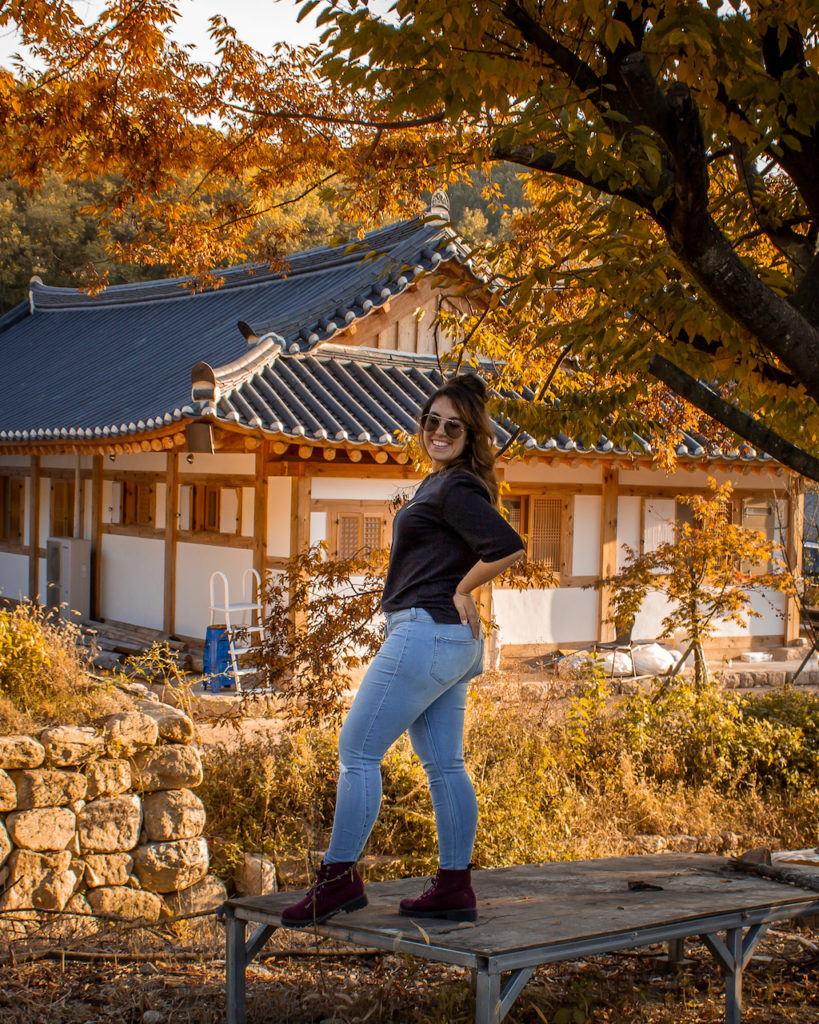
Located in Jeonbuk State, Jeonju is famous for its traditional Korean architecture, culinary heritage, and beautifully preserved cultural attractions. Its main draw is Jeonju Hanok Village, a neighborhood filled with hundreds of traditional-style Korean houses, many of which now operate as guesthouses, cafes, restaurants, and shops.
Autumn is a particularly pleasant time to explore because the cooler weather makes walking through the village much more comfortable. You’ll find seasonal color around the historic buildings, temple grounds, and nearby landscaped areas.
One of the most popular things to do is rent a hanbok and wander through the village. You can also visit Gyeonggijeon Shrine, which houses a portrait of King Taejo, the founder of the Joseon Dynasty.
And let’s talk about the food. Jeonju is especially famous for bibimbap, but you’ll also find delicious street snacks and its signature chocolate pies. Arrive hungry!
K-pop fans might also recognize Jeondong Cathedral from Taeyang’s Wedding Dress music video. Its striking architecture makes it another worthwhile stop while exploring the neighborhood.
Travel tip: Jeonju is accessible from Seoul by KTX train, making an independent trip entirely possible. You can also book a one-day Jeonju trip from Seoul.
The hanok village is best explored on foot, and staying overnight gives you a chance to experience the neighborhood after the day-trip crowds leave.
Best time for autumn scenery: Late October to early November.
28. Seongju
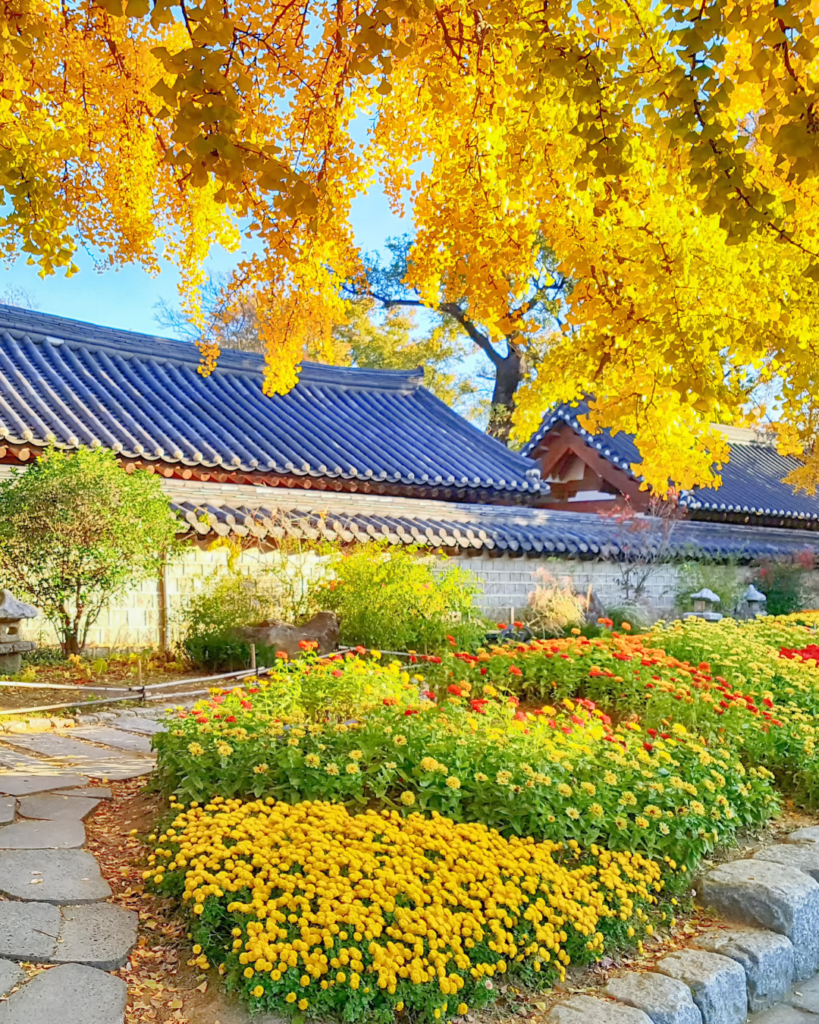
Seongju (성주) isn’t a destination you’ll find on every South Korea travel itinerary, which is exactly why it’s worth knowing about. Located in North Gyeongsang Province, this rural county offers a different side of Korea from the busy streets of Seoul and Busan.
I visited Seongju on an organized tour, and the area has some fascinating historical attractions. One of the most unusual is the Seongju Royal Placenta Chambers, where the placenta and umbilical cords of royal children were traditionally enshrined according to Joseon-era customs.
Yes, you read that correctly. Royal placentas.
In Korean royal tradition, preserving and ceremonially burying the placenta was associated with protecting the child’s health, longevity, and future prosperity. The surviving sites provide a fascinating glimpse into beliefs and rituals that aren’t commonly discussed in typical Korean history tours.
Seongju is also home to traditional villages, historic buildings, and rural landscapes that are particularly pleasant during the autumn harvest season.
Unlike Korea’s famous national parks, Seongju isn’t somewhere I’d recommend visiting solely for spectacular maple forests. Its appeal lies in combining countryside scenery with cultural experiences and lesser-known historical attractions.
Travel tip: I visited on a tour, but independent travelers will find renting a car helpful because the attractions are spread across the county and public transportation can be limited.
Best time to visit: October through early November for comfortable weather and autumn countryside scenery.
29. Seoraksan National Park
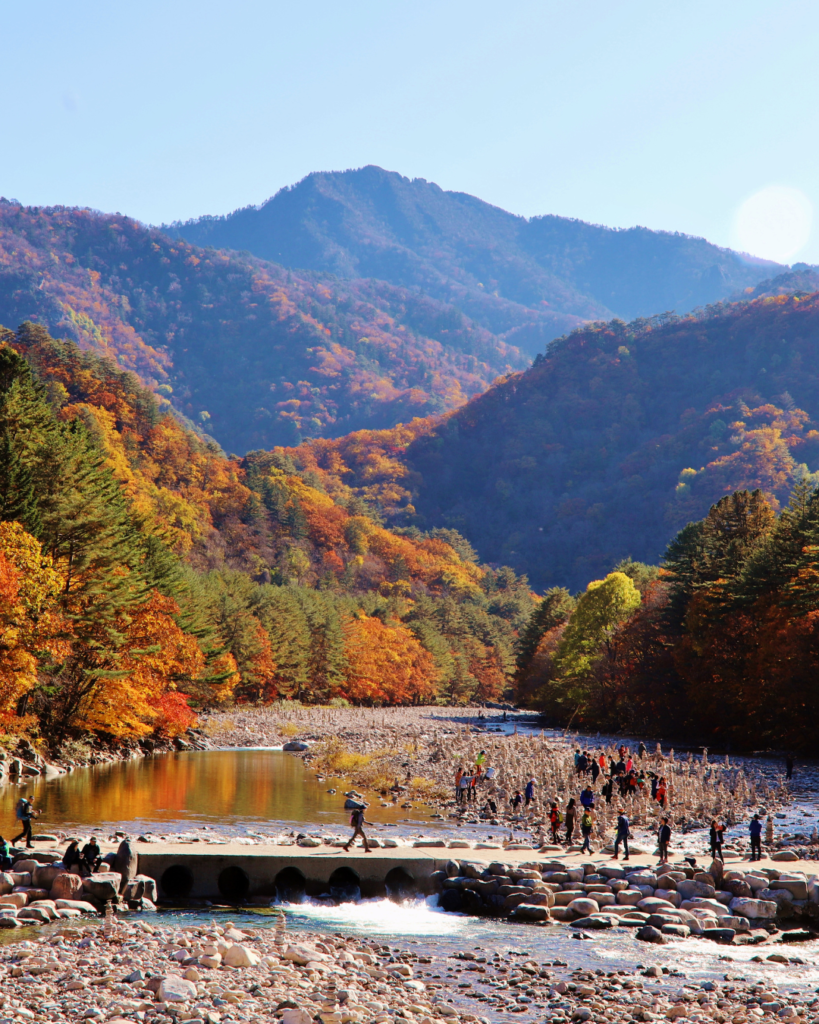
Seoraksan National Park (설악산국립공원) is one of South Korea’s most celebrated destinations for autumn foliage. Located in Gangwon Province near Sokcho, the park is famous for its dramatic granite peaks, deep valleys, waterfalls, and forests that change color earlier than many other parts of the country.
Because Seoraksan reaches higher elevations than Seoul, its autumn season generally begins earlier. The mountain’s upper slopes can start changing color in late September, with the most impressive displays often arriving during October.
One of the park’s major attractions is Sinheungsa Temple, a historic Buddhist temple surrounded by forested mountains. The enormous bronze Buddha statue near the temple is another recognizable landmark.
For visitors interested in hiking, Cheonbuldong Valley offers dramatic rock formations and forest scenery, although the full valley route requires preparation and isn’t a casual stroll. You can book a day trip to Seoraksan Mountain to enjoy your autumn in South Korea.
The Seoraksan Cable Car provides another way to experience the mountain landscape. It carries visitors toward the Gwongeumseong Fortress area, where the exposed rocky terrain offers sweeping views of the surrounding peaks.
You don’t need to be an experienced mountaineer to enjoy Seoraksan, but it’s important to choose your route carefully. Some of the park’s famous summit hikes are physically demanding and involve steep, rocky terrain.
Travel tip: Sokcho makes a convenient base for exploring Seoraksan. The park becomes extremely busy during peak autumn foliage, so allow extra time for transportation and consider visiting on a weekday. Cable car operations depend on weather conditions.
Best time for fall foliage: Mid to late October, with higher elevations changing earlier.
30. Jirisan National Park
Jirisan National Park (지리산국립공원) is home to Cheonwangbong Peak, which rises 1,915 meters above sea level.
Established in 1967 as Korea’s first national park, Jirisan stretches across three provinces: North Jeolla, South Jeolla, and South Gyeongsang. Jirisan is the second-highest mountain in South Korea after Hallasan on Jeju Island.
Piagol Valley is especially known for Jirisan’s autumn foliage. The valley’s maple-covered slopes and streams make it a popular alternative to tackling the park’s challenging summit routes.
Jirisan has been associated with Buddhist traditions, mountain worship, and the belief that certain natural landscapes possess spiritual significance.
Don’t mistake beautiful scenery for an easy hike. Jirisan has demanding mountain trails, and reaching Cheonwangbong requires proper preparation, suitable equipment, and a realistic understanding of your hiking abilities.
Travel tip: Decide which section of Jirisan you want to explore before booking accommodations or transportation. The park is enormous, and trailheads can be hours apart. Check current trail access and seasonal restrictions with the Korea National Park Service.
Best time for fall foliage: Mid-October through early November, with higher elevations changing first.
31. Songnisan National Park
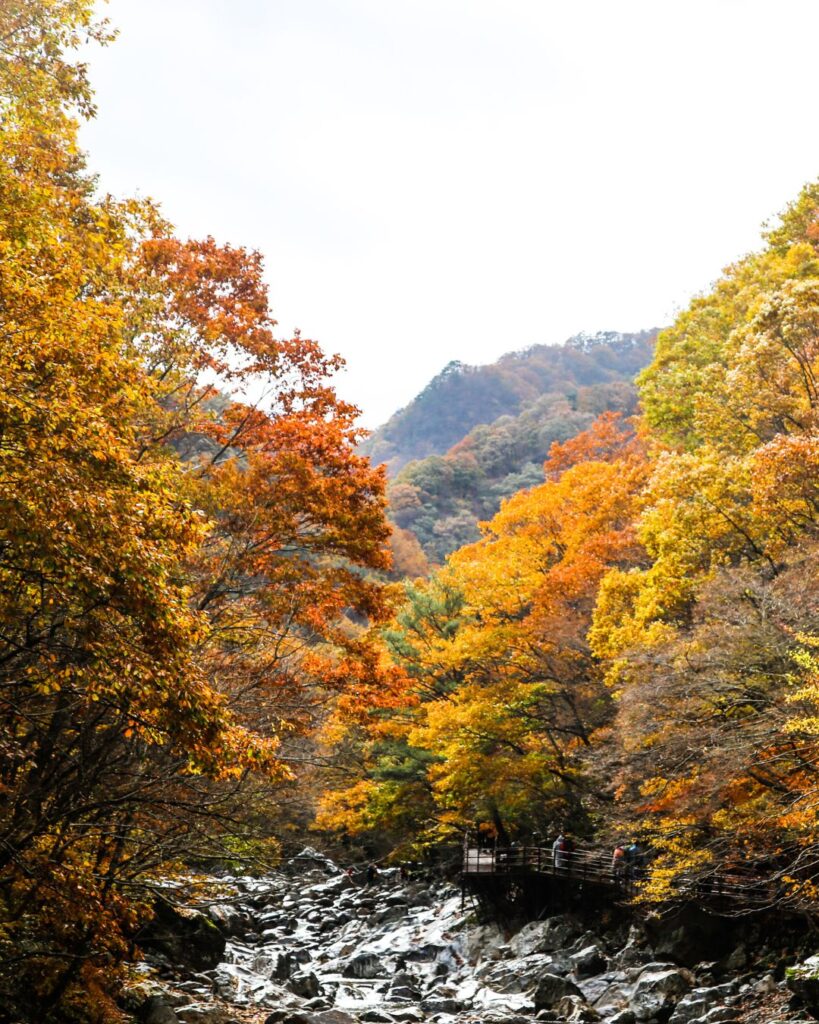
Songnisan National Park (속리산국립공원) combines two of my favorite things about traveling in Korea: historic Buddhist temples and mountain scenery.
Located primarily in Chungcheongbuk-do Province, Songnisan is known for its distinctive rocky peaks, forested valleys, and Beopjusa Temple, one of the country’s important Buddhist heritage sites.
The temple is particularly impressive because of its enormous bronze Buddha statue and historic buildings. Beopjusa is also part of the UNESCO World Heritage listing recognizing Korea’s traditional mountain Buddhist monasteries.
One of the most enjoyable ways to experience Songnisan in autumn is to follow the forested approach toward Beopjusa. The surrounding trees provide seasonal color, while the temple’s architecture adds an entirely different dimension to the landscape.
For hikers who want something more challenging, Munjangdae is one of Songnisan’s best-known viewpoints. The rocky summit offers panoramic views across the surrounding mountain ridges, although reaching it requires a substantial uphill hike.
You don’t have to conquer a summit to appreciate Songnisan. The lower forest paths and temple grounds are worthwhile destinations, particularly for travelers interested in Korean history and Buddhist culture.
Travel tip: Beopjusa is a good starting point for exploring the park. If you’re planning to hike Munjangdae, allow enough daylight for the return journey and check the trail’s difficulty before setting out.
Best time for fall foliage: Mid to late October through early November.
32. Odaesan National Park
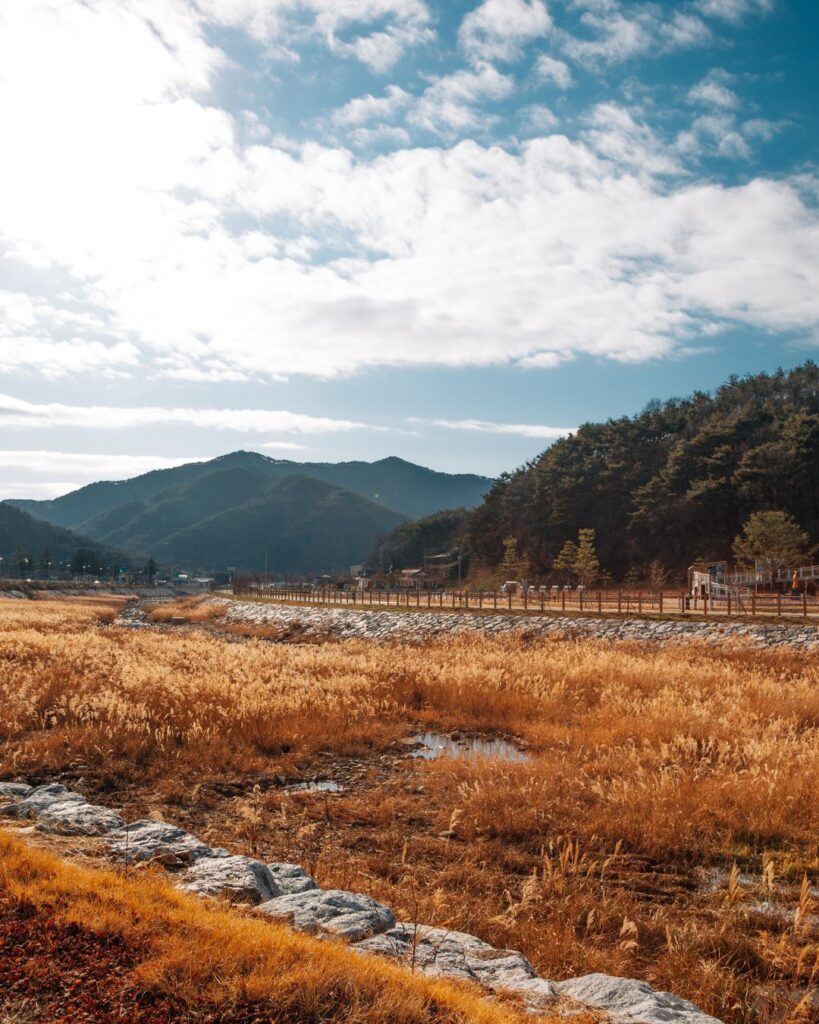
Not every memorable hike needs to end at the top of a mountain. At Odaesan National Park (오대산국립공원), some of the most rewarding scenery can be found along the forest paths connecting its historic Buddhist temples.
Located in Gangwon Province near Pyeongchang, Odaesan is known for its peaceful wooded valleys, mountain streams, and centuries-old religious heritage.
One of the park’s most recognizable attractions is Woljeongsa Temple, founded during the Silla Dynasty. Its entrance is lined with towering fir trees, creating an impressive woodland corridor that has become a popular destination in its own right.
For autumn foliage, the Seonjaegil Trail is particularly appealing. This approximately nine-kilometer route follows the Odaecheon Stream between Woljeongsa and Sangwonsa temples, passing through forests that change with the seasons.
The trail follows a historic route once used by Buddhist monks and pilgrims. Today, visitors can enjoy the combination of flowing water, wooden bridges, wooded paths, and traditional Korean temple architecture.
Odaesan offers a different experience from the dramatic granite peaks of Seoraksan. Its appeal lies in the forest itself and the opportunity to enjoy Korea’s mountain scenery without necessarily attempting a difficult summit.
Travel tip: The Seonjaegil Trail is approximately nine kilometers one way, so don’t confuse it with the much shorter fir forest walk near Woljeongsa. Plan your return transportation before beginning the longer route.
Best time for fall foliage: Mid to late October, with some lower-elevation areas retaining color into early November.

33. Halla Eco-Forest, Jeju Island
And finally, we’re heading to Jeju Island! While most travelers associate Jeju with beaches, waterfalls, volcanic landscapes, and Hallasan Mountain, the island also has some wonderful places to experience autumn.
Halla Eco-Forest (한라생태숲) is a restored forest ecosystem located on the slopes of Hallasan. The area was once degraded land before being rehabilitated into a protected natural space featuring native plants and woodland habitats.
Today, visitors can explore forest trails, observe native vegetation, and enjoy a quieter side of Jeju away from the island’s busiest tourist attractions.
One of the interesting things about autumn on Jeju is how the island’s geography influences the season. Higher elevations around Hallasan experience cooler temperatures and earlier foliage changes, while coastal areas remain comparatively mild.
Halla Eco-Forest is particularly appealing for travelers who enjoy botanical attractions and gentle nature walks. Rather than focusing on a single famous viewpoint, the experience is about exploring Jeju’s forest environment and discovering the island’s biodiversity.
And here’s something worth remembering: Jeju’s autumn season doesn’t follow exactly the same schedule as Seoul. Depending on the elevation and weather, you may find changing leaves at different times across the island.
Travel tip: Halla Eco-Forest is inland, so don’t confuse it with Hallasan National Park’s summit hiking trails. Check the forest’s visiting hours and trail information before going. Renting a car is generally the most convenient way to explore multiple inland attractions on Jeju.
Best time for fall foliage: Late October to November, depending on elevation and weather conditions.

Korea Fall Foliage Forecast 2026
Planning your trip around Korea’s autumn colors? Timing is everything! While the changing leaves usually begin appearing in the northern mountains before spreading south, peak foliage dates can vary considerably depending on elevation and weather.
According to the Korea Tourism Organization’s 2026 fall foliage forecast, Seoraksan is expected to reach peak color in late October, while Seoul and several southern mountain destinations should look their best in early to mid-November.
Here’s when some of Korea’s most popular foliage destinations are expected to reach peak color in 2026:
| Destination | Predicted Peak Foliage |
|---|---|
| Seoraksan National Park | October 25 |
| Bukhansan National Park | November 4 |
| Jirisan National Park | November 5 |
| Naejangsan National Park | November 11 |
| Hallasan, Jeju Island | November 13 |
These are forecasts, not guaranteed dates. Strong winds, rain, and changing temperatures can affect how long the leaves remain on the trees.
My recommendation: If you’re planning a trip to Seoul specifically for fall foliage, aim for late October through the first week of November. If you’re visiting later, consider heading farther south, where autumn colors often reach their peak after northern Korea.
For the latest information, check the Korea Tourism Organization’s official 2026 fall foliage forecast before your trip.
What to Pack for Fall in Korea
One thing I learned from living in South Korea is that autumn weather can be unpredictable. You might spend the afternoon walking around Seoul in a light sweater, only to find yourself reaching for a jacket as soon as the sun goes down.
October generally brings pleasant daytime temperatures, but November can feel significantly colder, especially in the mountains.
If you’re planning to spend time exploring Korea’s national parks, pack layers that are easy to add or remove throughout the day. A warm jacket, comfortable walking shoes, and a small daypack will make your adventures much more enjoyable.
And don’t underestimate the mountain weather! Higher elevations can be considerably colder than Seoul, particularly in the early morning.
I’ve put together a complete guide on what to wear and pack for Korea in fall to help you prepare for your trip.
Tips for Seeing Fall Foliage in Korea
After spending several autumn seasons exploring South Korea, I’ve learned that a little planning goes a long way, especially when you’re visiting popular foliage destinations.
Don’t limit yourself to Seoul. While the capital has beautiful parks and royal palaces, some of Korea’s most impressive autumn landscapes are found in its national parks and smaller cities. If you have the time, venture beyond Seoul and experience a different side of the country.
Plan around the region, not just the calendar. Fall foliage doesn’t peak everywhere at once. If the leaves haven’t changed in Seoul, you may have better luck at higher elevations. If you’re arriving in November, southern destinations may still have plenty of color.
Avoid popular hiking destinations on weekends. Koreans LOVE hiking, and national parks such as Seoraksan and Naejangsan attract enormous crowds during autumn. Visiting on a weekday can make a significant difference.
Be mindful of Korean public holidays. National Foundation Day and Hangeul Day fall in early October, and popular attractions can become busier around these holidays. Check the annual holiday calendar when planning your trip.
Don’t forget about autumn festivals. Fall in Korea isn’t just about changing leaves. It’s also the season for pink muhly grass, silver grass festivals, chrysanthemums, and seasonal cultural events.
For more inspiration, check out my Korea fall bucket list featuring 26 incredible things to do during autumn.
Final Thoughts on Fall Foliage in Korea
If there’s one season I could experience over and over again in South Korea, it would be autumn. Even after living there for nearly six years, I never got tired of watching the country transform as the leaves changed color.
And while Seoul’s royal palaces and famous parks are absolutely worth visiting, I hope this guide inspires you to venture a little farther. Some of my most memorable experiences in Korea happened outside the capital, exploring historic temples, wandering through traditional villages, and discovering places I might never have visited otherwise.
Whether you’re planning your first trip to Korea or returning to experience a different season, autumn is a wonderful time to explore everything this country has to offer.
With 33 destinations to choose from, there’s no shortage of places to add to your Korea fall itinerary. So grab your camera, pack your favorite autumn outfits, and get ready to experience one of the most beautiful seasons in South Korea!
Which of these fall foliage destinations in Korea would you love to visit? Let me know in the comments!


This post contains affiliate links which means at no additional cost to you, I make a small commission to help keep Globelle Gina running. Thanks for your support!
Free Seoul E-Book
Do you love South Korea?
Enter your name and email address and click the button below to receive your Easy Seoul Travel Guide so you can travel like a local!